Authentic Connection Strategies For Remote Workers
How do I transform transient coworking encounters into genuine local networks? I’ve discovered that intentional community engagement beats passive online scrolling every time.
I write to The ZIP Office because remote professionals deserve practical strategies beyond productivity hacks. Through my Bali stint, I leveraged Meetup and Glue, attended three micro-events monthly, and mastered basic Indonesian phrases. I ditched the tourist mentality—learned where locals grab kopi, respected cultural nuances, and used WhatsApp strategically to build real relationships beyond surface-level networking.
Last March, I met Ketut at a coworking space in Canggu. Instead of exchanging LinkedIn connections, we committed to weekly language exchanges. Six months later, she introduced me to her network—designers, entrepreneurs, and digital strategists. That single decision to invest genuine time transformed my entire professional ecosystem.
Quick Takeaways
- Leverage local platforms like Meetup and Glue to discover co-working spaces and smaller community events.
- Attend cultural festivals, markets, and neighborhood gatherings to build authentic local relationships.
- Use social media groups and messaging apps to stay connected with local professionals and digital nomads.
- Respect local customs, greetings, and language nuances to foster genuine interactions.
- Bring portable power sources and secure equipment to ensure uninterrupted remote work in unfamiliar environments.
Why Building Local Connections Makes Remote Work Better
Honestly, if you think remote work is just about avoiding the commute and binge-watching your favorite shows, you’re missing out on the real magic — and that’s building local connections.
When you immerse yourself in remote collaboration with folks around you, you access way more than just “working remotely.” You tap into cross-cultural understanding, which boosts your creativity and adaptability.
Remember how in the office, you just knew the landline was ringing, but now, in Bali’s co-working scene, you’re chatting with someone from Japan or Colombia? That’s the beauty.
These interactions push your skills, challenge your assumptions, and make your work feel less like a solo slog and more like global teamwork.
How to Find and Join Co-Working Spaces in New Cities
So, you’ve just landed in Bali, and the idea of working from some sleek co-working space sounds way better than skulking around in a cluttered Airbnb with questionable Wi-Fi, right? Finding a local workspace isn’t just about a desk—it’s your portal to community outreach and real connections. Want to make it effortless?
- Use platforms like Glue or Meetup to identify the coolest local spots, then drop by, introduce yourself, and soak in the vibe.
- Reach out on LinkedIn to fellow digital nomads or local pros—think of it as your digital handshake.
- Bet on micro-events or shared classes—like coding meetups or yoga sessions—where you can flex your skills and break the ice beyond small talk.
Skip the travel fatigue—plug into Bali’s co-working scene and access the full digital nomad vibe.
Attending Local Events and Meetups to Grow Your Network

When you’re remote working in Bali, attending local events and meetups isn’t just a killer way to boost your network—it’s like adding rocket fuel to your digital nomad lifestyle. Think of it as breaking free from the cubicle matrix and diving into real connections—no corporate jargon, just authentic vibe-sharing. Embrace local business etiquette and cultural customs; like knowing when to shake hands or bow, and understanding that “yes” might mean “maybe.” Want to stand out? Bring a genuine curiosity, ask smart questions about Bali’s tech scene, and share your own epic wins from your previous office grind. Additionally, choosing the right laptop bag for bus commute can help you stay organized and comfortable while navigating daily adventures. Here’s a quick cheat sheet:
| Do’s | Don’ts |
|---|---|
| Respect local customs | Ignore etiquette |
| Engage authentically | Sell too hard |
| Listen more than talk | Dominate conversations |
| Follow up afterward | Ghost too soon |
Creating Micro-Events to Deepen Local Relationships
Envision this: you’re tired of the same old coworking grind, surrounded by strangers who all seem to be mentally checked out. Want to break free? Create micro-events that really matter.
Host a lunch featuring local food, like Bali’s famous nasi campur, to fuel authentic conversations. Or, organize a quick coffee walk past city landmarks—like the Ubud Monkey Forest—to share stories and laugh about office drudgery.
Here are some tips:
- Invite 4-6 local professionals from different fields for a casual meetup.
- Plan themed outings, combining work with sightseeing—because who said networking can’t be fun?
- Offer to speak at a meetup about your remote IT tricks—biggest hit? Sharing old war stories from the cubicle chaos.
Don’t just blend into the background—make real connections that last.
Using Digital Platforms to Connect With Local Professionals

If you’ve ever felt like shouting, “There’s gotta be a better way!” scrolling through endless LinkedIn feeds, you’re in luck. Digital platforms are your secret sauce for real local connections.
Use local social media to find hidden gems—think Facebook groups, WhatsApp chat threads, or Nextdoor — and immerse yourself in virtual event partnerships. These are like secret handshakes with your city’s movers and shakers.
Want to meet someone who actually knows the best coffee spot? Join an online community, then attend a virtual meetup or webinar tailored to your area.
It’s easier than hunting down old colleagues from that boss’s “networking” boondoggle. Plus, these tools keep things flexible—you can network in pajamas, sip Bali coffee, and still make meaningful links. Who needs a cubicle?
Remember, understanding how to define your professional brand effectively can make your local networking efforts even more impactful.
Engaging in Community Activities and Cultural Events
Diving into local community activities and cultural events might just be the best decision you’ll make as a remote worker in Bali—trust me, it beats swapping memes with your coworkers over Slack any day. Forget the bland Zoom meetings; get into community festivals or neighborhood gatherings. These are your gateway to real, genuine local bonds, not just superficial LinkedIn connections.
- Attend a temple festival or local parade—live music, local food, pure chaos.
- Join neighborhood clean-ups or charity events—imagine turning city trash into new friendships.
- Volunteer at a cultural workshop—learn local dance or craft, and accidentally become part of the scenery.
- Plus, embracing curved monitors in your workspace can boost your comfort and immersion, making your remote work sessions more enjoyable.
Recall your last office job? Yeah, it’s time to ditch that boring 9-to-5 mindset. Dive deep, make the connections worth remembering.
Staying Connected Across Time Zones With Asynchronous Communication
Ever wonder how you can keep your remote collaborations smooth when your team is scattered across different time zones? Here’s the scoop: leverage asynchronous communication tools like Slack threads, Loom videos, shared docs, and scheduled emails.
It’s like having a digital skinny dip, freeing you from idea-troughs and late-night ping-pong. Just bear in mind to respect cultural sensitivity—what’s cool down in Bali might be rude elsewhere.
Create clear calendars to avoid stepping on each other’s toes, and record meetings for those time-shifted folks (because they’re no longer in your “9-5” orbit). Think of it as digital jazz—sync your moves without needing to be in the same room.
Also, be mindful of public WiFi security—using a virtual private network (VPN) can help protect your data from potential threats. PCMag called it “the future,” but honestly, it’s been around since dial-up. Welcome to the liberation!
Building A Local Professional Network
Building a local professional network might sound like a chore, but it’s actually your secret weapon for staying ahead in the game—especially when you’re working remotely from Bali. Recall those endless Zoom calls with your old boss? Yeah, leave that behind.
Now, you’re creating real face-to-face vibes, making genuine connections.
- Join coworking spaces, attend meetups, and swap your skills face-to-face or virtually. Think of it as skill exchange on steroids.
- Leverage virtual mentorship; find local experts who can level you up without the overhead of traditional networks.
- Host micro-events—coffee walks, lunch talks, or casual hangouts—that turn strangers into allies.
- Consider using inverters to maintain reliable power during your meetups and work sessions in remote areas.
Why stay siloed? Building your local network frees you from the cubicle prison. Own your space.
Culture Navigation for remote working
Have you ever tried blending in at a busy Bali café, only to realize your noise-canceling headphones aren’t enough to drown out the chaos? That’s where cultural nuances and language barriers come into play.
As a remote IT expert, I’ve learned that mastering local social cues—like how locals order their kopi or greet neighbors—boosts your street cred. Don’t rely on Google Translate for everything; instead, learn a few basic phrases, or you’ll sound like a robotic drone, not a local ally.
Engage with community events or ask locals for tips—nothing beats genuine effort. Old colleagues’ advice? Respect the language curve. It’s your secret weapon for turning fleeting encounters into real connections—plus avoiding the awkward “do you speak English?” trauma. Incorporating effective stretching routines into your day can also help you stay comfortable and alert during long hours of work on the go.
Local Business Card Essentials
When you’re lounging in Bali’s co-working scene, trying to look professional but also blend in with the locals, a good business card isn’t just a fancy paper toss—it’s your secret handshake in digital form. As an IT whiz working remotely, I’ve learned that smart business card etiquette is all about making a memorable first impression. Think slick, simple, and culturally respectful. Additionally, consider the benefits of optimizing gear weight to ensure you can carry your essentials comfortably without feeling burdened. Card design tips? Keep it minimal—your name, title, contact info, and maybe a splash of local flair. Keep in mind, it’s not a badge of corporate conformity but your personal branding tool. For example, swap out the corporate logo for a stylish icon that matches your vibe. Want to stand out? Be bold, but avoid clutter—less is more. Your card should tell your story without shouting it.
Essential Laptop Accessories for Mobility
Switching from a cozy Bali café to a bustling co-working hub, your old laptop suddenly feels like a relic from the 90s—clunky, sluggish, and desperately in need of a tech upgrade. That’s where essential laptop accessories for mobility come in.
First, portable power becomes your best friend: think high-capacity power banks or portable chargers—because running out of juice mid-project? Not on your watch.
Next, security software is your digital armor—use encrypted VPNs and robust firewalls to keep prying eyes away.
Recall how old colleagues used to fuss over clunky cables? Ditch those for sleek foldable mice and slim hubs.
Trust me, upgraded accessories aren’t just nice, they’re necessary—so you can stay liberated, efficient, and ultra-mobile, just like today’s modern hybrid commuter style discovery.
Digital Language Translation Tools
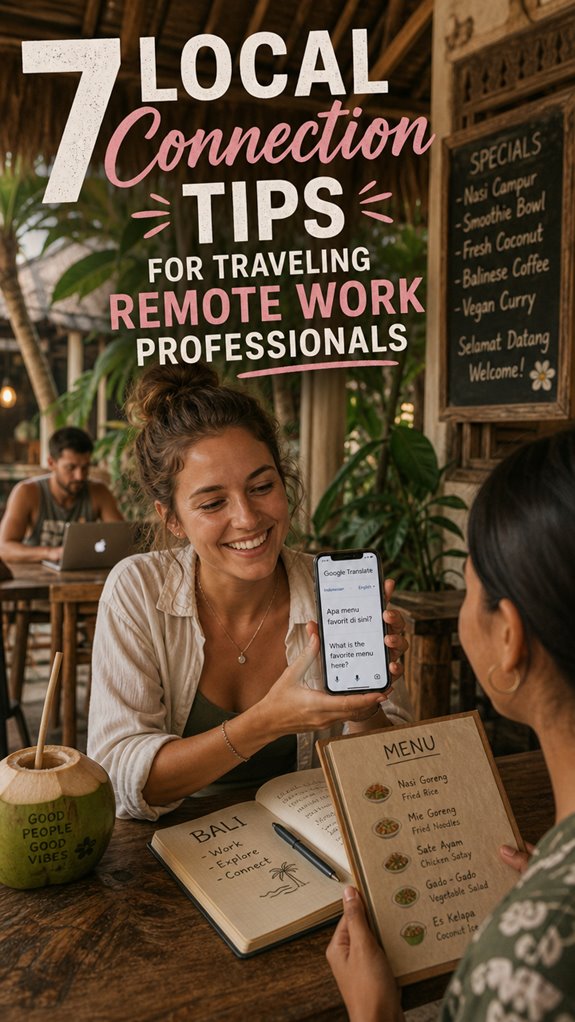
Visualize trying to negotiate a deal in Bali’s vibrant co-working scene, and suddenly someone throws in a “habla espanol” or “parlez vous francais?” You’d probably wish you’d a magic wand, right? That’s where digital language translation tools become your new best friend—like Google Translate, DeepL, or Microsoft Translator.
They help you navigate restaurant etiquette, local slang, and even tricky cultural nuances without needing a pocket full of phrasebooks or risking an awkward “lost in translation” moment. Just snap a photo of a menu, ask your app to translate, and boom—you’re in the loop.
Use these tools to feel liberated, break down barriers, and turn the local language into an open doorway, not a wall. It’s your secret weapon against misunderstandings. Top pocket translator devices like handheld translators or smartphone apps can offer quick, accurate translations in real time, making conversations smoother and more natural.
FAQ
How Can I Effectively Balance Work and Networking During Travel?
You gotta master Time Management and sharpen your Communication Strategies. Use digital tools like Slack and Loom for asynchronous updates—brace yourself for the bliss of no endless meetings!
Schedule solid work blocks, then carve out time for spontaneous coffees or micro-events. Keep in mind, setting clear boundaries keeps you sane.
Think of it as blending work with the thrill of discovery — embrace it! Done right, you’re the master of your own remote universe, not some cubicle slave.
What Safety Precautions Should I Take When Attending Local Events Alone?
Think of your safety like guarding a precious tech stash—personal safety is your firewall.
Always have emergency prep—know local contacts, save emergency numbers, and carry a fully charged power bank.
Trust me, last time I missed an exit in Bali’s crazy traffic, my quick reflexes saved me from an unplanned adventure.
Be friendly but alert; don’t wing it like a clueless intern, and you’ll stay smooth while mingling solo.
How Do I Adapt to Different Cultural Etiquette Quickly?
You gotta embrace cultural sensitivity and master etiquette adaptation like a pro — it’s your key to thriving in Bali’s coworking scene.
Respect local customs—don’t assume everyone’s into handshakes or eye contact.
Immerse yourself in local slang, learn basic phrases, and observe how folks handle gestures.
Recall old boss’s advice? “When in Rome,” but here, it’s more like “when in Bali, go with the flow—and avoid offending everyone.”
Trust me, they’ll thank you, and your vibe just skyrockets.
What Are Some Low-Cost Ways to Make Genuine Local Connections?
A stitch in time saves nine, right? To really connect on a budget, immerse yourself in community volunteering — it’s authentic, free, and a vibe.
Plus, language exchanges turn awkward small talk into real *conversations* with locals. Meet a local at a market, swap skillz, maybe teach a bit of your language, and boom — genuine bonds form faster than your last office email chain.
Who needs corporate budgets when you’ve got heart and hustle?
How Can I Leverage My Existing Skills to Benefit the Local Community?
You can totally leverage your IT skills by diving into community volunteering and skill sharing. Offer free tech workshops at local cafes or co-working spots—remember those days troubleshooting in the office?
Host coding jams or mentor locals online—think Zoom but cooler. Old colleagues or your boss? They might connect you with NGOs that need digital saviors. Sometimes, saving the world one line of code at a time feels way better than those robotic meetings!
References
- https://communitynet.app/en/blog/remote-workers-guide-to-building-local-professional-network
- https://www.quantumworkplace.com/future-of-work/keeping-remote-workers-connected
- https://www.greatplacetowork.com/resources/blog/x-ideas-to-keep-your-remote-team-socially-connected
- https://www.linkedin.com/pulse/ways-feel-more-connected-remote-environment-from-worker-beth-fiset
- https://www.virtualvocations.com/blog/remote-working-tips/the-17-best-ways-to-stay-connected-while-working-from-home/
- https://www.remotetribe.life/remote-working/how-to-stay-connected-as-a-remote-worker/
- https://restless.co.uk/career-advice/help-finding-a-job/ways-to-stay-connected-while-working-remotely/
- https://techday2022.appen.com/life_at_appen/stay-connected-even-when-working-remotely-lifeatappen/
- https://enterprisersproject.com/article/2018/10/7-ways-conquer-networking-challenges-when-you-work-remote
- https://www.achievers.com/blog/remote-working-tips/
- https://northwest.education/insights/careers/networking-while-working-remotely/