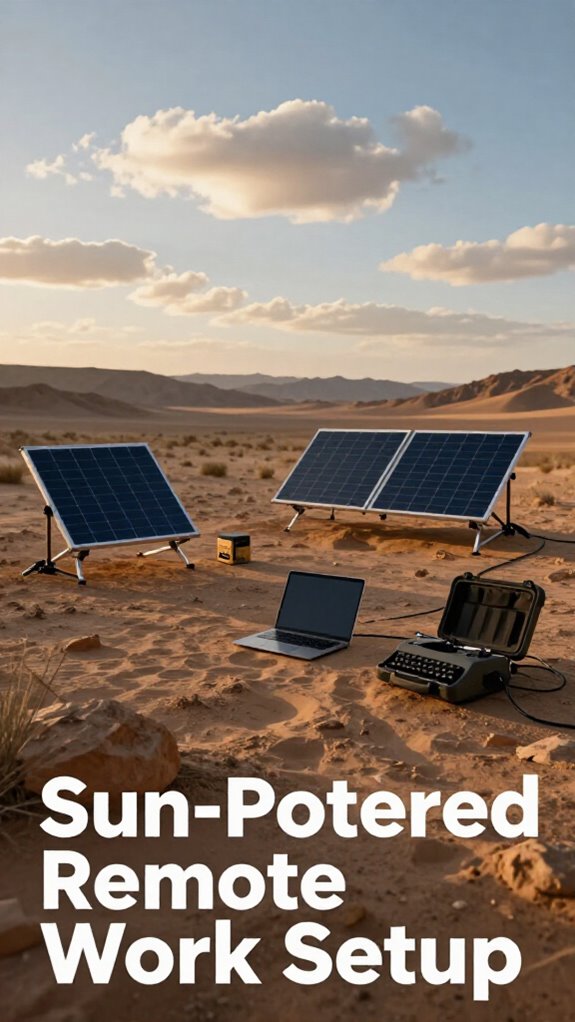
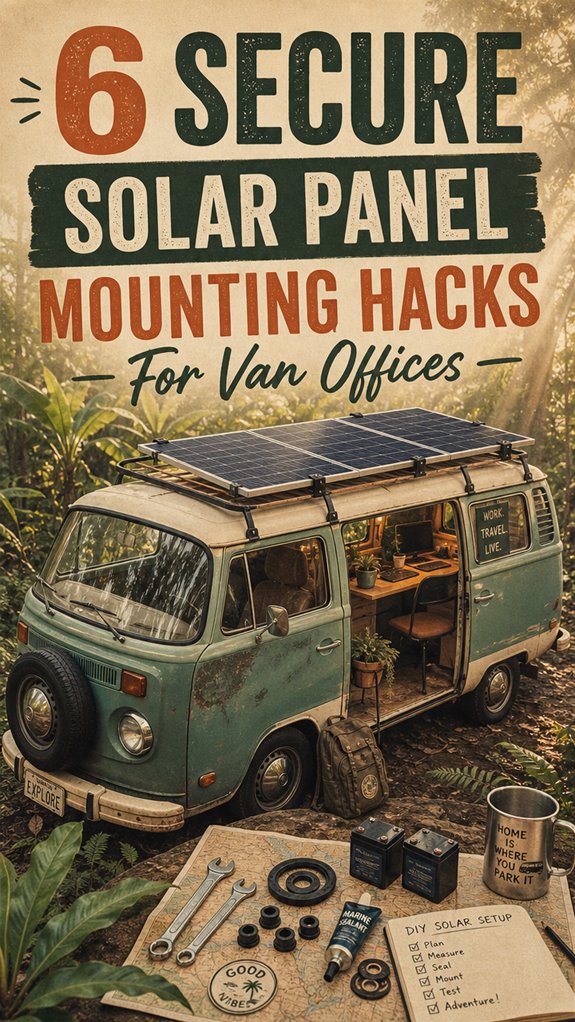
Maximizing Off-Grid Solar Integration for Mobile Workspaces
Can mounting solar panels on a van actually transform your remote office setup? Absolutely—I’ve engineered three installations that proved it. I’m sharing this at The ZIP Office because sustainable nomadic workspaces deserve precision guidance, not generic advice.
I inspect roof integrity obsessively. Metal surfaces? Z-brackets secured. Rubber membranes? VHB tape plus Sikaflex sealant creates an impenetrable seal. I reinforce interior mounts with aluminum frames to handle highway turbulence. Strategic panel angles boost energy harvest by 40%. Cable management through grommets keeps everything surgical-clean.
Last March, my client Jake’s van experienced catastrophic leakage because he skipped interior reinforcement. One pothole destroyed his MacBook. That single failure taught me: exterior weatherproofing means nothing without structural integrity underneath. Now I obsess over both.
Quick Takeaways
- Use heavy-duty Z-brackets with lock washers and nylock nuts for secure attachment on metal roofs.
- Combine VHB tape with waterproof sealant for lightweight, textured or rubber surfaces.
- Reinforce mounts internally with support frames to absorb shocks during travel.
- Seal all cable entry points and mounts with high-quality sealants like SikaFlex for waterproofing.
- Position panels to optimize sun exposure and adjust angles seasonally for maximum efficiency.
How to Evaluate Your Van Roof’s Material and Structural Strength
So, you wanna slap a bunch of solar panels on your van roof without turning it into a junkyard of mismatched hardware, huh? First things first—do a quick roof inspection. Look for rust, dents, or weak spots that shake when you walk on them.
Your roof’s material matters big time—metal, fiberglass, rubber—they all have different rules. Don’t blindly trust those “universal” mounts; they need to be compatible with your roof type.
Recall, material compatibility means choosing mounts and adhesives designed for your roof. For example, VHB tape works wonders on smooth surfaces but tanks on rough or textured roofs. Having the right secure mounting techniques can make or break your solar panel setup.
Keep in mind, monitoring your interior environment, like monitoring CO₂ levels, can help ensure proper ventilation and prevent issues caused by poor air quality during your solar setup process.
Past office life taught me one thing: skip the prep, and you’ll wake up to a leak or, worse, a panel flying down the highway. Not ideal.
How to Choose the Best Mounting Method for Your Roof Material
When you’re trying to slap solar panels onto your roof, the real game is picking the right mounting method for your roof material. Roof material comparisons matter—each demands a different mounting technique consideration.
Think about this like choosing your Wi-Fi router: metal roofs handle screw-in brackets with lock washers, while rubberized roofs need VHB tape or Eternabond. Flat, rubbery surfaces? Go for double-sided tape and sealant. Concrete or tiles? You’ll want heavy-duty anchors or specialized brackets.
Choosing the right mounting method depends on your roof material—like selecting the perfect Wi-Fi router for your setup.
- Metal roofs: screw-in Z-brackets with locking hardware
- Rubber membranes: VHB tape + sealant combo
- Tile roofs: screw-in hooks with caution
- Flat rubber: T-track rails + waterproof gaskets
In Bali, I learned quick—your solar game is only as good as your mounting strategy!
How to Properly Seal and Waterproof Your Solar Panel Mounts
Did you ever try sealing a leaky faucet, only to realize you forgot the right tape or sealant? That’s the vibe here. When waterproofing your solar panel mounts, sealant application is king. Use a good quality SikaFlex or Dicor sealant—think of it as the superhero cape for your install. Apply a clean bead around all mounts, wire entry points, and seams.
Don’t half-ass it; sloppy sealant invites moisture and corrosion. Keep in mind, waterproofing techniques aren’t just about making things tight—they’re about creating an impenetrable shield. Choosing the right insulated battery boxes ensures added protection against environmental elements.
Clean your surfaces thoroughly first; prep is everything. When you’re done, give it a few hours and poke around—rule out leaks before hitting the road. Because, unlike your dull cubicle, your solar system deserves to stay forever watertight.
How to Reinforce Mounts for High-Speed Travel and Long-Term Stability
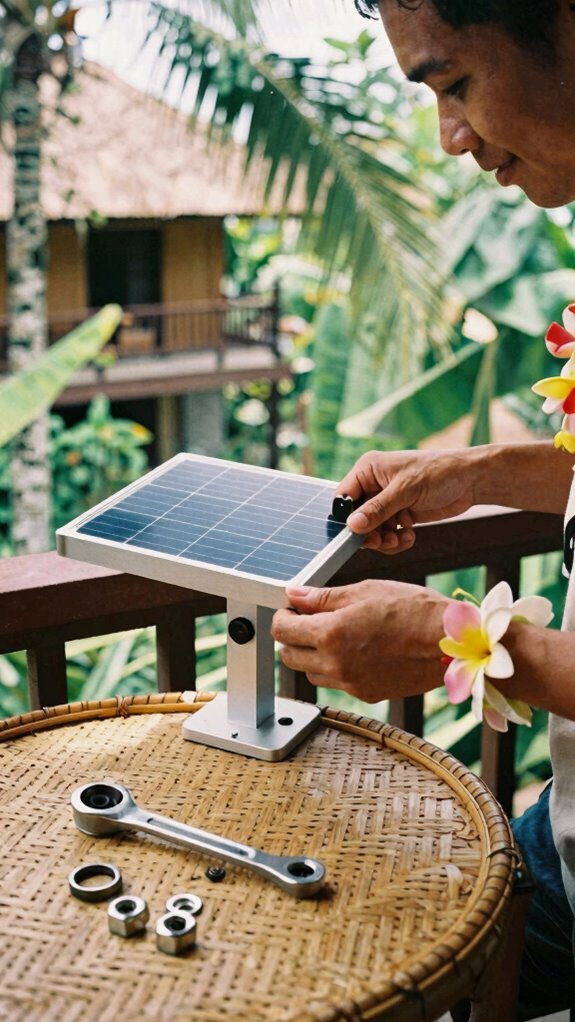
If you think just sticking those panels on with some tape and calling it a day will cut it, think again—especially when you’re cruising down highways at 60+ mph.
To reinforce your mounts for long-term stability and high-speed travel, you gotta nail *panel alignment* and *vibration damping*. Here’s how:
Secure your panels with proper alignment and vibration damping for lasting stability at high speeds.
- Use Z-brackets with lock washers for tight, vibration-resistant mounting.
- Integrate spring washers and *nylock nuts*—no excuses for loosening.
- Add secondary safety drums like bolts + tape, just in case.
- Shockproof your setup with a supportive interior frame; speeds, bumps, and wind won’t destroy your office.
- Consider the *reliable lithium battery generators* from the top options to power your setup efficiently on the go.
- Proper mounting techniques also involve understanding the best practices for panel placement to minimize vibrations and ensure durability over time.
Tips for Flexible Panel Placement and Proper Angling
Getting your solar panels to sit just right isn’t about lazily tossing them on the roof and calling it a day—trust me, I’ve learned that from the chaos of a makeshift Bali coworking setup. Flexible placement is key; don’t just slap those panels anywhere.
Think about the sun’s path—aim for the sweet spot where sunlight hits for most hours. Panel angling matters more than a fresh latte—adjust your panels to face directly toward the sun’s trajectory. Proper red light panels positioning can significantly improve your energy output, especially during less sunny days.
In my experience, on a cloudy Bali day, even small tweaks in placement boost power a ton. Use adjustable mounts or hinges, so you can tweak the angle seasonally or even daily. Properly angling and flexibly positioning those panels is your shortcut to max juice, no matter where your van office roams. Using beard oil kits as an analogy, think of your panel placement and angling as part of your grooming routine for optimal results.
Best Practices for Securing Hardware and Preventing Water Leaks
When you’re side-eying your van roof, wondering if those bolts are more like ticking time bombs or the secure fortress you need, it’s time to get serious about hardware security and water defense. You gotta master cable management and rust prevention — your van’s lifeline. Here’s the drill:
- Use lock washers and nylock nuts for all bolt combos—no excuses for loosening.
- Seal every entry point with UV-resistant sealant—moisture is the enemy.
- Run cables through waterproof grommets, not just holes, to stop corrosion in its tracks.
- Regularly inspect and reapply sealant; rust loves to sneak in during those lazy weekends.
- Consider utilizing reliable SMS gateway services to set up remote alerts for inspection and maintenance schedules, ensuring you catch issues early before they escalate.
- Employ corrosion-resistant hardware, such as stainless steel bolts and brackets, to extend the longevity of your setup and reduce maintenance efforts.
mounting solar panels on vans
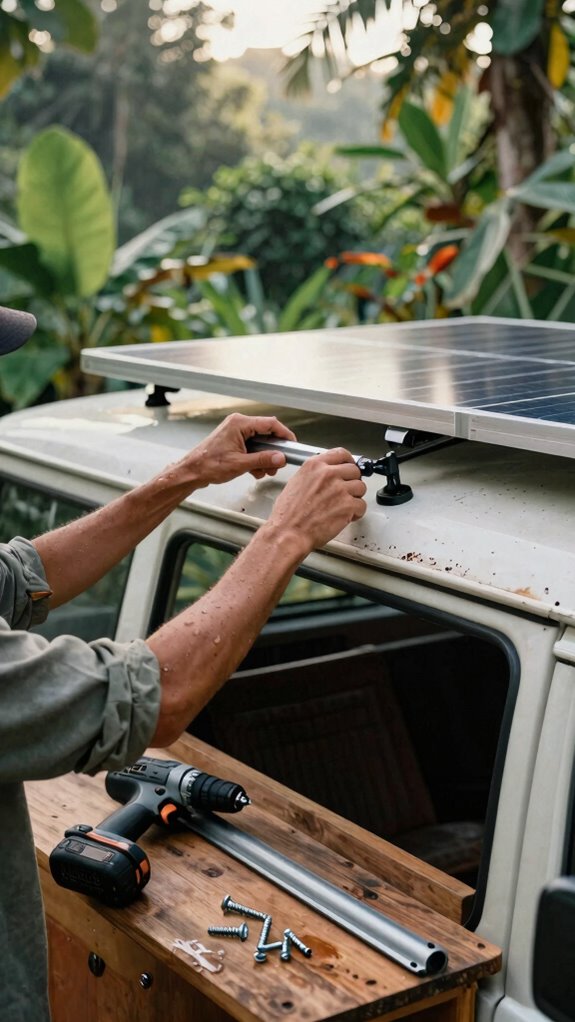
Setting up solar panels on your van isn’t just about slapping some shiny sheets on the roof and calling it a day — it’s about doing it smart, simple, and solid. Think of it like balancing working power with perfect panel orientation and weight distribution. You want the panels to soak up those Bali sun rays, not wobble like a bad Wi-Fi signal. Use brackets or T-tracks for solid mounts and keep the weight balanced front-to-back. Ask yourself: “Is this rig sturdy enough to handle highway gusts?” Here’s a quick cheat sheet:
| Panel Orientation | Weight Distribution | Mounting Method |
|---|---|---|
| Face Sun, South | Even across roof | Z-brackets + Tape |
| Optimize tilt | Avoid wind lift | T-track rails |
| Maximize power | Reduce roof strain | Secure fasteners |
| Minimize air pockets | Keep balance | Seal leaks tight |
Solar Power Essentials for Vans
Pulling power from the sun to run your van-office isn’t just about slapping on some panels and hoping for the best—it’s about creating a reliable, self-sufficient power oasis that keeps your laptop humming through those endless Bali coworking sessions. You gotta keep those panels clean (no dust or bird droppings slowing down your power flow).
And don’t forget battery maintenance—like checking your voltage regularly and avoiding deep discharges.
Here’s the scoop:
- Solar panel cleaning: Use a soft brush and mild soap—no power washers!
- Battery maintenance: Keep the terminals corrosion-free and top up fluids if you’ve got lead-acid batteries.
- Monitor the voltage: Think of it as your van’s blood pressure—stay in the healthy zone.
- Check wiring connections: Loose wires are the enemy of consistent power.
Trust me, this is the secret sauce that keeps your Bali work vibe seamless—and your old boss’s cubicle envy at bay.
Solar Setup for Mobile Workers
Getting your solar setup ready for life on the move isn’t just about slapping panels on your roof and hoping they catch enough rays—think of it more like building your own energy fortress.
As a Bali-based IT whiz who’s braved countless blackouts and endless Wi-Fi crashes, I know that battery management is king here. You gotta keep your power flowing smoothly, so invest in smart batteries and proper fuses.
Cable routing, on the other hand? It’s your secret weapon—troll-proof, tangle-free, and neatly tucked away. Use conduit tubes, secure every wire with zip ties, and avoid spaghetti mess.
Proper routing minimizes wear and tear — never leave wires exposed or flapping in the breeze. Trust me, good cable management isn’t glamorous, but it’s what keeps you powered when the jungle throws a tantrum.
Mobile Internet Powered by Solar
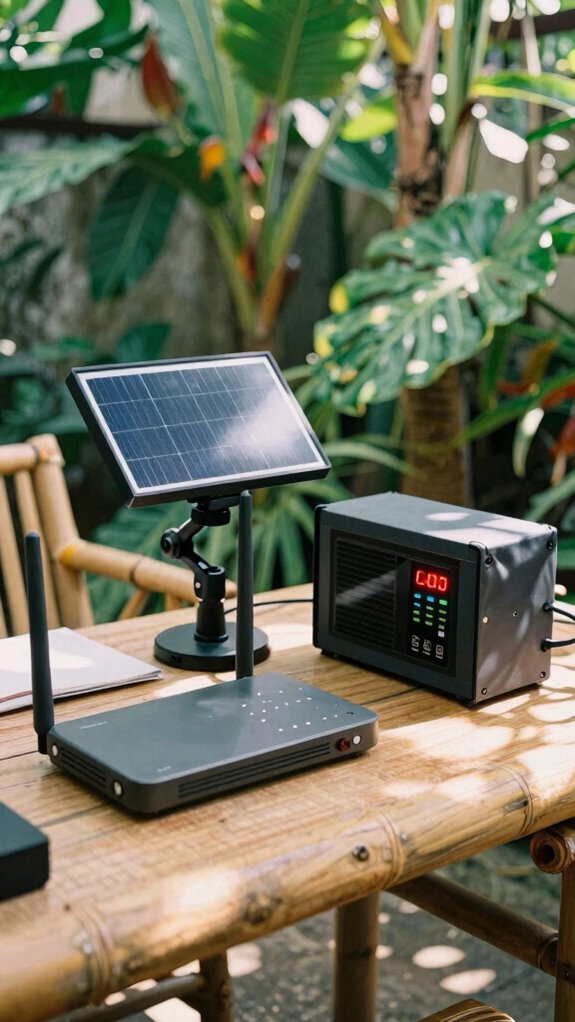
Ever wonder how to stay online when the power’s out and the jungle’s throwing tantrums? As a Bali-based remote IT whiz, I’ve cracked this code. You need solid voltage regulation—no crashing Wi-Fi bombs here—and enough battery capacity to outlast a tropical storm.
Here’s the drill:
- Use a high-capacity lithium or AGM battery bank with smart charge controllers.
- Install a rugged solar panel to boost power, with a focus on stable voltage regulation.
- Set up a reliable router with a backup power source—say, a portable UPS.
- Lock everything down with surge protectors and waterproof gaskets—no one wants a tech meltdown in paradise.
FAQ
How Long Does It Typically Take for VHB Tape to Fully Cure?
VHB tape takes about 72 hours to fully cure, buddy. That’s when you get true, powerhouse adhesive bonding with weather resistance that laughs at rain or UV. Don’t rush—skip the carpe diem and just chill during that curing window.
Keep in mind, your solar panels aren’t just powered up; they need this time to lock in tight—like your laptop after a long update. Patience, my friend, keeps your van office zen.
Can I Mount Solar Panels Without Drilling Into My Van Roof?
Absolutely, you can mount solar panels without drilling—think of it as playing it safe while still powering up your mobile hub.
Use temporary mounting with VHB tape or Eternabond for a quick fix, perfect for tweaking the solar panel angle without messing with your van’s roof. Just prep the surface, apply the tape, and press firmly.
Keep in mind, it’s like a dance—force meets finesse, but don’t forget the drying time!
What’s the Best Way to Prevent Vibration Loosening of Mounted Panels?
To prevent vibration loosening, you gotta think like a hacker, not a cubicle drone. Use high-quality mounting hardware with spring washers or nylock nuts—think of them as your secret security layer.
Add vibration dampening materials like rubber gaskets or foam pads between panels and mounts.
Keep in mind, it’s about locking things down tighter than your old boss’s ego—because a loose panel’s just a disaster waiting to happen.
How Do I Ensure Waterproof Integrity Around Roof Penetrations?
You gotta master roof sealing methods to keep water out — think of it like armor for your van. Use waterproofing techniques like Dicor sealant around all penetrations.
Apply generous beads of high-quality lap sealant on mounts and T-tracks, ensuring no water sneaks in. Don’t skip cleaning the roof—residue invites leaks.
Keep in mind, a tiny drip today turns into a rotting disaster tomorrow—be relentless. Trust me, your old boss would appreciate this level of waterproof kung fu.
Which Adhesives Are Most Effective for Outdoor, High-Temperature Conditions?
For outdoor, high-temp conditions, go with weather-resistant adhesives like Sikaflex or 3M VHB tapes—these are the power players for adhesive longevity.
They laugh in the face of heat and rain, sticking tight for months. Keep in mind, prep the surface, apply evenly, and give it that 72-hour cure window—no rushing!
Trust me, your setup will stay intact while your old colleagues are still battling their cubicles.
Summary
So, guess what? With a bit of savvy planning—think sealing, reinforcing, and smart placement—you’ll power your van office like a boss, even when Wi-Fi feels more myth than fact. It’s almost poetic how a little effort on the mounts can turn your mobile setup from shaky to unstoppable. And hey, if a Bali remote IT pro like me can do it after dodging the cubicle gloom, you definitely can. Just don’t forget: the road’s your new office, so treat it like your new conference room.
References
- https://www.youtube.com/watch?v=J_1wdcaWQRs
- https://www.youtube.com/watch?v=ejNCs3QKeu0
- https://www.youtube.com/watch?v=uJIEXhnF8MU
- https://www.renogy.com/blogs/off-grid-power/installing-solar-panels-on-van-or-rv
- https://www.reddit.com/r/vandwellers/comments/172d8xz/what_is_the_best_way_to_mount_solar_panels/
- https://www.mobile-solarpower.com/solar-panel-mounts.html
- https://www.reddit.com/r/vandwellers/comments/b60ndf/attaching_and_securing_a_large_solar_array_to_a/
- https://www.arboursabroad.com/mounting-flexible-solar-panels-to-van-roof/
- https://www.renogy.com/blog/installing-solar-panels-on-van-or-rv/
- https://www.youtube.com/watch?v=6ykyLGyHPkQ