
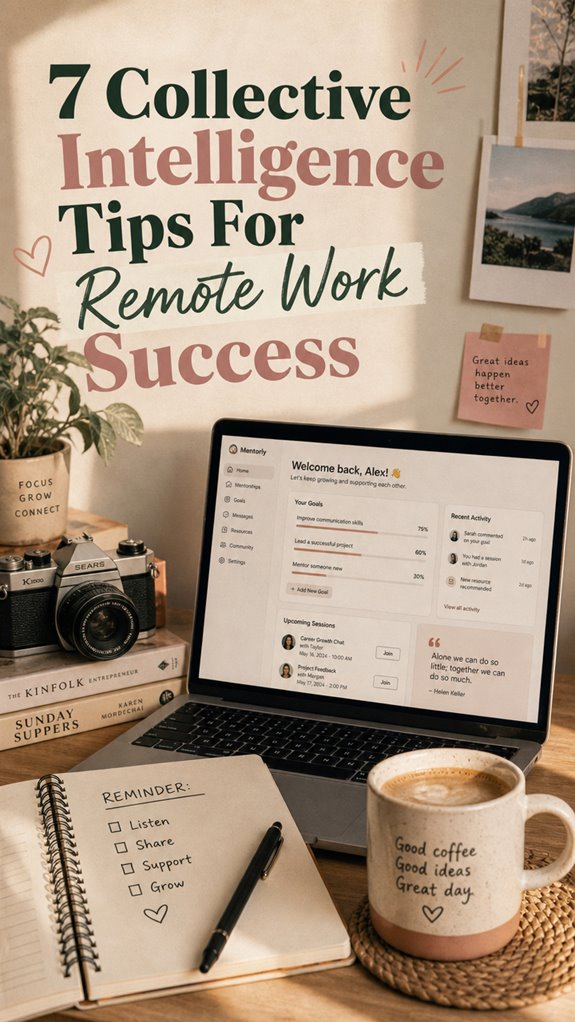
Synchronizing Remote Brilliance: My Path to Distributed Team Mastery
How do scattered teams actually think together? I discovered that asynchronous intelligence beats heroic individual grinding every time.
I write to The ZIP Office because distributed work demands we abandon cubicle-era collaboration myths. My experience managing five developers across Bangkok, Lisbon, and São Paulo revealed that 15-minute standups—structured, ruthless, non-negotiable—replaced our toxic Slack hemorrhaging. Clear OKRs replaced vague “5% better” platitudes. Empowered decision-making obliterated approval bottlenecks. Mentorship loops and mastermind structures became infrastructure, not buzzwords.
Last March, my team nearly fractured. Sarah in Portugal felt invisible. Then we implemented async documentation paired with weekly deep-work blocks. Suddenly, psychological safety emerged. She shipped her strongest feature that quarter. Turns out, distributed cognition thrives on transparency, not proximity. The office metaphor died for us that week.
Quick Takeaways
- Foster open communication channels and regular updates to ensure everyone shares knowledge and stays aligned.
- Leverage collaborative tools and platforms for seamless idea sharing and joint decision-making.
- Establish clear goals and roles to promote accountability and collective progress.
- Cultivate trust through transparency, active listening, and genuine acknowledgment of team members’ contributions.
- Encourage diverse input and brainstorming sessions to harness varied perspectives and boost innovation.
Hold Short, Regular Catchups to Boost Remote Collaboration
Ever tried hitting your goals with a bunch of random, scattered chats and emails that lead nowhere? Yeah, I’ve been there—frustrating mess, right?
As a remote IT guru chilling in Bali’s co-working scene, I’ve learned that short, regular catchups are game-changers. Think of them as your team’s power-up sessions—quick, sharp, no fluff.
Schedule daily 15-minute standups—trust me, even the most “busy” team members carve out that time. Use tools like Slack or Teams for clarity. Keep the focus on priorities, not endless gab sessions.
Implementing ways to reduce echo can make your calls more productive and clearer, ensuring everyone hears and understands each other perfectly. And don’t forget, alignment of communication is crucial for maintaining team cohesion and preventing misunderstandings.
You want your squad fired up, aligned, and ready to crush it. Forget waiting for big meetings; keep the momentum alive. It’s like having your own secret weapon against the chaos of scattered communications.
Streamline Communication With Fewer, Clearer Channels
Switching gears from those quick daily catchups, now it’s time to get serious about your digital chatter. Ever try juggling 12 Slack channels, emails, and WhatsApp groups? It’s chaotic—and no one’s really winning.
So, here’s the deal: consolidate communication. Pick 2-3 platforms that actually *work*. Say, one for real-time stuff like Slack or Microsoft Teams, plus email for formal updates. Keep channels focused—no “general, random banter” mess. You don’t want your team wasting minutes hunting for info amid clutter.
Set clear rules: “No, you don’t need to ping me on Insta about project deadlines.” Recall when your old boss insisted on a new channel every week? Yeah, let’s not do that. Incorporating heavy sound blankets into your workspace can also reduce background noise and enhance focus during remote meetings.
And if you’re sharing files or laptops, choosing a suitable laptop bag for bus commute can make a big difference in keeping your gear organized and protected. Less chaos, more control—your team stays sharp, and your mental health stays intact. Cheers from Bali!
Set SMART Goals to Align Your Remote Team
When you’re trying to keep a remote team from turning into a scattered mess, setting clear goals isn’t just a nice-to-have — it’s the secret sauce. Think of SMART goals like your team’s GPS; specific, measurable, achievable, relevant, time-bound, and *voila*, alignment ensues.
Clear goals are your remote team’s GPS—align, focus, and succeed effortlessly.
Don’t just say “get better at coding,” be exact: “Improve bug fix rate by 20% in three weeks.” Share these goals during quick syncs, and use tools like Asana or Jira to track progress.
Remember old boss’s mantra, “Clarity breeds accountability.” If everyone’s rowing with the same map, the boat’s faster.
Want your Bali team to nail deadlines? Set that SMART, no-nonsense goal, and watch the magic happen. No more guessing games—just pure aligned power.
And if your team encounters connectivity issues, knowing tips for securing reliable public WiFi connections can help ensure everyone stays connected and productive. Additionally, being aware of essential tips for securing your home WiFi network can prevent potential security breaches that disrupt access and compromise sensitive information.
Create Dedicated Workspaces to Signal Focus Time

Have you ever tried working from your kitchen table, only to find your “office” turns into a battleground of dirty dishes and snack wrappers? Yeah, I’ve been there.
As an IT pro lounging in Bali’s co-working scene, I can tell you—creating a dedicated workspace is your secret weapon. It’s not just about having a clean corner; it’s about signaling *focus time*, like a bat signal for your productivity.
Set up a specific spot with a good chair, decent lighting, and minimal distractions. Use cues—a “Do Not Disturb” sign, or even a stylish monitor setup—that tell others, “I’m in my zone.” Incorporating office plants can also help improve your workspace environment and boost concentration.
Old colleagues? They’ll respect your hustle more when your space screams ‘professional’. And remember, effective stretching routines can do wonders in helping you stay comfortable and alert during long work sessions.
Trust me—resist the urge to turn your bed into your desk. Success demands boundaries.
Encourage Team-Based Decision-Making and Co-Creation
Ever tried making a big decision solo, only to realize halfway through that you’re kind of lost? Honestly, that’s a nightmare no one wants to relive. In Bali’s buzzing co-working scene, I’ve seen remote teams crush power moves by making decisions together, not behind closed doors. It’s all about co-creation—tapping into your crew’s collective brainpower. Get everyone involved, toss ideas around in a casual Slack channel, or hop on a quick video brainstorm. When everyone’s voice is heard, your project hits new heights. Integrating the right web hosting plans can also ensure your team’s collaborative tools run smoothly, enabling seamless decision-making processes. Using technology that maximizes your team’s efficiency allows for more dynamic and effective collaboration. Here’s the emotional rollercoaster:
| Feelings | Actions | Outcomes |
|---|---|---|
| Confidence | Share ideas openly | Stronger buy-in |
| Frustration | Silence doubts | Clearer direction |
| Power | Co-develop plans | Dominance in your space |
| Satisfaction | Celebrate wins | Team cohesion |
Stop siloing, own the power, lead with collective genius.
Use Transparent, Asynchronous Platforms for Flexibility
Switching to transparent, asynchronous platforms isn’t just a fancy trend — it’s a game-changer, especially if you’re tired of inbox chaos and notification overload. Why drown in a sea of ping-pong emails or get lost in endless chat chains? Instead, use tools like Notion, Trello, or ClickUp — think of them as your secret weapon for boss-level control.
These platforms let you post updates, assign tasks, and share files with clarity and purpose — all at your own flow. Want to flex your strategic muscles? Set clear deadlines, pin important docs, and keep everything visible. Incorporating blue light glasses can also support your eye health during long screen hours, making your remote work experience more comfortable.
Recall that time in the cubicles, where every message required an email expedition? Yeah, forget that. Remote teams thrive when transparency equals real power — plain and simple. Plus, incorporating command hook packs can help you organize and store physical tools efficiently, ensuring your workspace remains tidy and distraction-free.
Develop Emotional Intelligence Practices to Build Remote Trust

Envision this: you’re lounging in Bali’s breezy coworking space, sipping bubble tea, wondering why your remote team still feels like it’s stuck in a Mountaintop “Office Space” nightmare. It’s because you haven’t harnessed emotional intelligence. Power players like yourself know trust isn’t built with click buttons or Slack emojis, it’s about real connection.
Building real team trust goes beyond emojis—it’s about genuine connection and emotional intelligence.
To level up:
- *Read emotional cues*: Notice tone and body language, even via screen.
- *Practice vulnerability*: Share your struggles—trust is a two-way street.
- *Give genuine praise*: Recognize efforts, not just results, to boost morale.
- *Set clear boundaries*: Respect personal time, avoid burnout signals power.
- *Follow up sincerely*: Ask how they’re really doing, not just ‘status update.’
- *Optimize your office lighting*: Proper office lighting setup can improve focus and comfort, fostering better communication and emotional connection. Understanding the importance of silent zones can further enhance concentration and reduce distractions during critical moments of engagement.
Old boss? Fire them — focus on authentic human bonds instead.
Using Mastermind Groups For Growth
Now, if you think cranking out solo work in Bali’s cozy cafes or that sleek, guarded “Ghost Kit” setup is enough to conquer the new frontier of high-level professional mojo, think again. Mastermind groups are your secret weapon. They’re like a turbocharged think tank, pushing your growth beyond what solo grind can achieve. Basically, you connect with 5–8 high-tier peers — think other elite freelancers or tech gurus — who challenge, support, and hold you accountable. Here’s the scoop:
| Role | Benefit | Action Step |
|---|---|---|
| Peer Coach | Biz clarity, accountability | Share your SMART goals, get honest feedback |
| Brain Trust | Creative breakthroughs | Brainstorm, co-develop projects |
| Power Ally | New opportunities | Tap into their networks |
| Idea Catalyst | Fresh viewpoints | Regularly swap disruptive ideas |
| Growth Scout | Strategic understanding | Review wins, setbacks, and next moves |
Don’t be the solo prophet stuck in the wilderness—leverage your tribe for real growth. To launch a successful professional Slack group, understanding how to foster content collaboration is essential for building a thriving community.
Affordable Remote Mentorship Tools
If you’re tired of shelling out a fortune for mentorship programs that seem more like trillion-dollar investments than accessible tools, then you’re in luck—because the future’s all about affordable, no-nonsense options that actually work.
I’ve been living the Bali remote life, practicing smarter choices, and trust me, expensive mentorship is so last decade. Want power but hate drain-your-wallet schemes? Here’s what you need:
- Slack & Discord: Create private channels for instant Q&A sessions, tailored for quick feedback.
- Google Workspace & Notion: Share, organize, and brainstorm like pros—your digital whiteboard on steroids.
- MentorCruise & GrowthMentor: Affordable platforms connecting you with industry pros, minus the ego. Water Level Sensors are a great example of budget-friendly tools that enhance remote learning by providing real-time feedback.
- YouTube & Udemy: Learn from the best, anytime, anywhere—no middlemen.
- Telegram Groups: Fast, focused, real-time advice—because sometimes, quick hits beat lengthy courses.
- Cost-effective tools ensure you get mentorship benefits without breaking the bank.
Power moves are just a click away—why pay more?
Virtual Home Office Setup

Setting up your virtual home office isn’t just about plopping a laptop on your bed and hoping for the best — no, this is where the magic (or chaos) truly begins. Visualize you’re Bali’s IT guru, sipping a coconut while configuring your elite workspace like a boss. Power means clarity, focus, control. For instance, choosing ergonomics wisely can significantly boost your productivity and comfort during long work hours. Incorporating cloffice elements into your setup can seamlessly blend style and functionality for an inspiring environment.
| Focus Area | Key Action | Why It Matters |
|---|---|---|
| Ergonomics | Invest in a carbon fiber stand | Keeps you sharp and prevents tech neck |
| Connectivity | Satellite internet & power | Stay online anywhere, anytime |
| Privacy | Noise-canceling headphones | Blocks chaos, fuels deep work |
| Organization | Smart cable management | No more spaghetti disasters |
| Environment | Minimalist decor & lighting | Sets the tone, keeps distractions low |
Remote Mentorship Matching Platforms
Ever wondered how to find the perfect mentor without breaking a sweat or suffering through endless email chains? Well, welcome to the future of power moves—remote mentorship matching platforms. Envision swift, AI-driven algorithms linking you to mentors who aren’t just about small talk but about practical firepower. No more begging for recommendations or peer pressure — just pure strategic alignment.
Here are some game-changers:
- Smart Matchmaking: Platforms like Chronus or Mentorloop analyze your goals to connect you with laser-focused mentors.
- Legacy Data Use: Tap legacy achievements to attract mentors who truly get your vision.
- Real-Time Feedback: Storm through your growth sprints with instant input from high-caliber mentors.
- Exclusive Access: Platforms like Together or GrowthMentor are like VIP clubs for ambitious go-getters.
- Goal Trackers: Lean on built-in dashboards — keep scoring those wins.
Ready to level up?
FAQ
How Can I Measure the Effectiveness of Remote Team Collaboration?
You measure remote collaboration like a tech wizard with a crystal ball. Plunge into real data—use collaboration tools’ analytics, monitor project timelines, and gather feedback via quick Pulse Surveys.
Look for patterns—are meetings energizing or draining? Check response times, task completion rates, and team morale.
Keep in mind, old office habits—like afternoon dread—won’t cut it here. Instead, track transparency, engagement, and shared purpose like your prized Slack badge collection.
That’s how you truly dominate remote mastery.
What Strategies Encourage Proactive Communication Among Remote Team Members?
Ever wonder how to get your crew to talk more without sounding like a broken record? Set clear “power-up” checkpoints—daily quick huddles, use multimedia on Slack/Teams, and ask “What’s blocking YOU?”
Like when I used Google Jamboard with my Bali mates, or ghosted my old boss from the old days—who always ignored emails. Build trust by sharing wins, celebrating big and tiny, and don’t be that person who solely tweets at 2 a.m.
How Do We Address Conflicts That Arise During Remote Decision-Making?
Conflicts during remote decisions? Ditch the drama with direct, open-talk. Call out issues early, like you’re Steve Jobs revealing the iPhone—no fluff, just facts. Use tools like Slack for rapid reflection, and give everyone a voice, even that quiet coder.
Keep in mind, transparency breeds trust; hiding disagreements? That’s how you turn sparks into dumpster fires. Lead with clarity, keep it chill—your team’s drive depends on it.
What Are Best Practices for Maintaining Team Cohesion Remotely?
Imagine this: your team’s as synchronized as a drone swarm, buzzing through Bali’s vibrant co-working spaces.
To keep that vibe, host regular, fun check-ins—think virtual happy hours, not staid meetings.
Use tools like Slack, Miro, or Teams to build trust and share wins.
Set clear goals, celebrate micro-milestones, and give a shoutout.
Fast, transparent communication melts remote isolation faster than your old boss’s bland memos.
Ready to rule the remote universe?
How Can Organizations Sustain Long-Term Remote Work Engagement?
You gotta make remote work feel less like a grind and more like your power move. Set epic goals, keep your groove via digital watercoolers like Slack or Miro, and sprinkle in fun rituals—think virtual happy hours or surprise care packages.
Recall Lisa from finance? She’s killing it with her R&R retreats. Keep routines tight, stay transparent, and don’t ghost your team. After all, who isn’t tired of the cubicle snooze fest?
References
- https://www.cmu.edu/tepper-news/news/stories/2020/april/remote-working-best-practices-anita-woolley.html
- https://andysto.com/building-collective-intelligence-in-remote-teams/
- https://www.adeccogroup.com/our-thinking/articles-and-editorials/harnessing-the-collective-intelligence-of-remote-teams
- https://www.icagile.com/resources/7-tips-for-effective-remote-team-management
- https://clevercontrol.com/fr/building-high-performance-remote-teams/
- https://pmc.ncbi.nlm.nih.gov/articles/PMC9807077/
- https://www.insperity.com/blog/emotional-intelligence-while-working-remotely/
- https://fr.slideshare.net/slideshow/the-future-of-remote-teams-how-to-finetune-virtual-collaboration-17370846/17370846
- https://www.reflectionpoint.org/whitepapers/unlock-the-collective-intelligence-advantage
- https://klaxoon.com/insight/5-ways-to-maximize-collective-intelligence-in-a-flexible-work-environment/