Breathing Better: My Remote Office Air Quality Wake-Up Call
My CO₂ levels hit 1,200ppm last Tuesday. That’s when I realized my “home office” was basically a sealed terrarium.
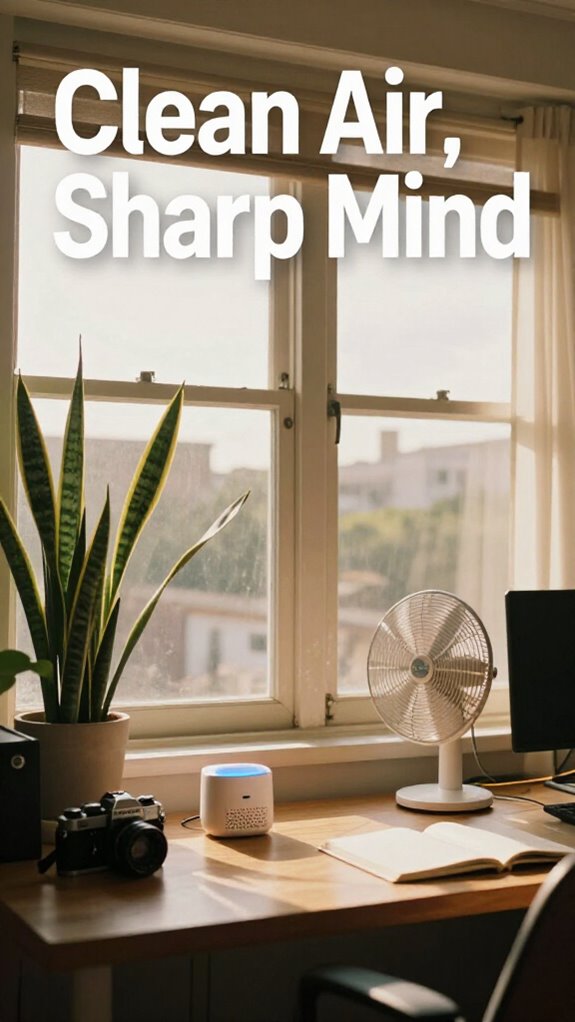
I’m sharing this at The ZIP Office because remote workers deserve better than stale air sabotaging productivity. I upgraded to a Coway AP-1512HH HEPA purifier and installed smart vents synced to my calendar. Weekly filter swaps—even pristine-looking ones—became non-negotiable. Snake plants near intake points helped. Air quality sensors proved my nose was lying. My focus improved measurably.
Last month, a colleague mentioned her headaches vanished after positioning her Blueair purifier strategically. She’d been ignoring air quality entirely. Within 48 hours, she noticed sharper thinking. That conversation crystallized everything: ventilation infrastructure matters as much as your monitor. Your lungs aren’t backup systems.
Quick Takeaways
- Use true HEPA and carbon air purifiers to trap dust, pollen, and VOCs for cleaner, brain-boosting air.
- Place air-purifying plants like snake plant and poth sick near vents to enhance natural filtration and airflow.
- Swap HEPA filters every 7 days in high-pollen areas and clean surfaces weekly to reduce contaminants.
- Position purifiers near workstations and windows to maximize filtration and fresh air integration.
- Monitor PM2.5 levels with smartphone sensors and respond to pollution spikes with increased ventilation.
Monitor CO₂ for Peak Cognitive Performance
Did you know that proper air quality control can significantly improve cognitive function and overall well-being? Stay sovereign. Incorporating reliable water level sensors can help ensure your office environment remains optimal, especially in maintaining appropriate humidity levels that support healthy air quality.
Choose a True HEPA + Carbon Air Purifier
If your old cubicle had the air quality of a gym sock stuffed in a server rack, then yeah, you’re gonna feel like a zombie by noon—good news? You’re in control now. Ditch the stale, CO₂-heavy air and grab a true HEPA + carbon air purifier.
Still breathing office sludge? Ditch the CO₂ swamp—grab a HEPA + carbon purifier and turn your space into a crisp, clean, brain-fueled fortress.
It’s not just “nice to have,” it’s your biohacking baseline. HEPA traps 99.97% of dust, pollen, and that weird Bali mold spore floating in—carbon nukes VOCs from cleaning sprays or your neighbor’s durian lunch.
Old Todd from accounting? Still breathing recycled office grief. Don’t be Todd. Use portable filtration when you’re mobile, and position near a window to sync with outdoor airflow for fresh O₂ swaps. Maintaining proper air exchange rates is vital for avoiding stagnant air buildup and ensuring a continuous supply of fresh air.
Think of it as your personal atmosphere upgrade—because sovereignty includes sniffing clean, crisp air while crushing code in your beachside bungalow. Your brain will thank you. Proper air filtration can significantly improve indoor air quality, reducing contaminants that commonly circulate in public or shared spaces.
Place Your Desk Away From Off-Gassing Sources
Just ’cause you escaped the fluorescent hellhole doesn’t mean your new paradise isn’t quietly poisoning you—yes, surprise, that sleek new bookshelf or that “aroma therapy” candle Janelle from Slack recommended? *Babe.*
New furniture, cleaning products, even your boss’s old leather chair—off-gassing city. All that VOC stink feeds right into air recirculation, bathing your brain in chemical haze. And scent diffusion? That’s just nature’s way of saying *run*.
Keep your desk at least six feet from off-gassing sources—melamine shelves, vinyl blinds, scented tech dust covers (yes, they exist). Recall Todd from accounting? He thought his IKEA desk was a win. Two weeks in, he’s sneezing like a rom-com extra. Don’t be Todd.
Open windows, boost ventilation, and for the love of Zip Office, skip the pine-scented USB humidifier. Your prefrontal cortex will thank you.
Sync Ventilation With Your Work Hours
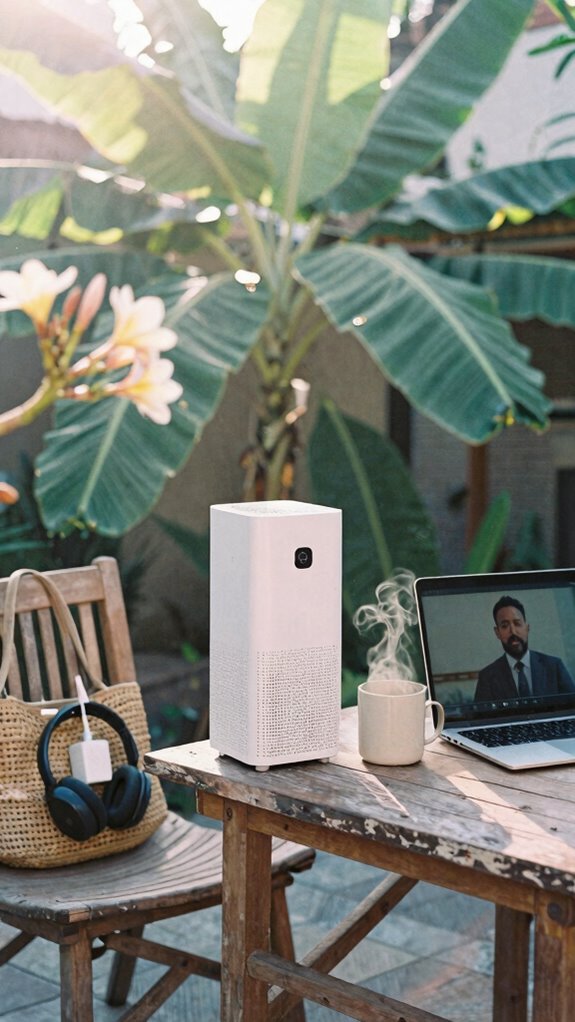
– Incorporate portable air purifiers to enhance indoor air quality without relying on cell service.
You don’t “commute.” You orchestrate.
And your lungs? They’re edge nodes in your personal performance grid.
Incorporating travel-friendly air purification devices can help maintain optimal air conditions regardless of your location.
Now breathe like you mean it.
Pick Air-Cleaning Plants for Your Desk
You want the good stuff—the real MVPs of phytoremediation, not some sad succulent that croaks if you look at it wrong. Think snake plant: tough as nails, cleans the air while you sleep. Or pothos—it chills in low light and *actually* reduces indoor humidity.
Look, Brenda from Accounting still waters her desk fern daily (bless her), but you? You’re syncing biotoxins to your circadian rhythm like a biohacker from the future. Place plants near vents to boost natural air flow—strategic, not decorative.
Jade plants? Cute, but not winning any phytoremediation championships. Try a peace lily—dramatic flair *and* mold control.
Recall Gary? Still coughing in his cubicle farm while we thrive. These aren’t just plants—they’re your silent co-pilots in the Great Untethering. So go ahead: green-ify your deskzone.
Your brain’ll thank you when your signal’s strong and your air’s cleaner than a corporate apology.
Clean Filters and Surfaces Weekly
While everyone else is still stuck in their sad little box farms, sneezing into lukewarm coffees next to dusty CRTs from 2012, you’re out here building a sovereign air fortress in a Bali co-working pod—so why let grime ghost your gains?
You *own* your environment now—air filter placement isn’t just logistics, it’s strategy. Dusty filters = biohacked sleep debt. Wipe down your battle station weekly with surface disinfectant like you’re erasing Michael Scott’s legacy (RIP, Dunder Mifflin).
- Swap HEPA filters every 7 days if you’re in high-pollen chaos
- Blast keyboard gunk with compressed air before it becomes a petri dish
- Disinfect your laptop screen and phone—yes, even where Todd from Accounting never dared
Clean air isn’t lazy wellness—it’s edge infrastructure. Your brain’s the mainframe. Protect the node. Ensure your environment maintains optimal air quality by checking air filter placement regularly. Keep in mind that air filter efficiency can vary based on usage and placement, so proper positioning maximizes filtration effectiveness.
Design for Air Quality in Tiny or Mobile Offices
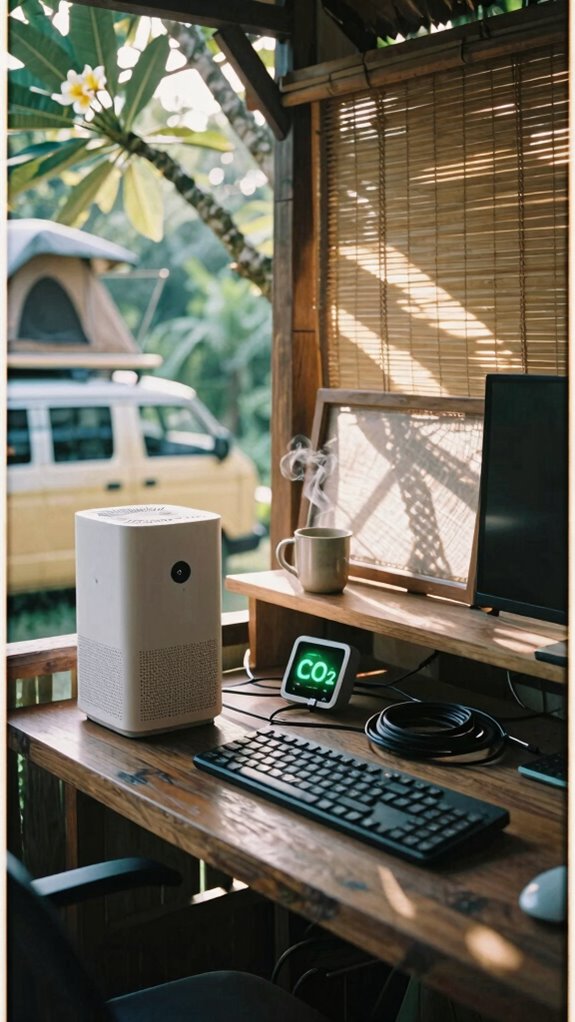
When your office is the size of a closet or the backseat of a van in Patagonia, air quality isn’t just about comfort—it’s ops security for your brain. You think Dwight Schrute’s beet farm had clean air? Nah. But you’re not stuck in a Dunder Mifflin cube—you’re sovereign.
So treat your mobile workspace like the high-performance node it is. Airflow optimization isn’t optional: crack a window, use a mini fan to push stale air out the top, pull fresh in low. Stack smart. And don’t skimp on filtration techniques—grab a portable HEPA filter or slap a nano-coated mesh on your vent. Monitoring CO₂ levels can also help ensure your space stays well-ventilated and supports productivity. Remember, mastering collaboration across time zones can also mean coordinating when your workspace’s air quality is at its best for your productivity.
I learned this after passing out mid-Zoom in a Bali co-working pod. Your brain’s your best hardware. Don’t let it breathe junk. Outfit it like you mean it.
Air Purification for remote working
- Run your purifier 24/7—yes, even when you’re deep-linking in spatial meetings
- Swap filters every 3–6 months—purifier maintenance isn’t sexy, but lung health is
- Place it where airflow isn’t blocked (not behind your retro beanbag, Greg from 2023)
- Keep your purifier in a well-insulated environment to maximize efficiency and air quality. Regularly monitoring air quality levels ensures your space stays healthy and fresh.
Buy HEPA Filters for Urban Co-Working Spaces
Let’s be real—your old cubicle at Bedford Group probably recycled more germs than it did bad business decisions. Now you’re in a Bali co-working space breathing someone’s thirdhand vape and Jakarta’s smog—congrats, you’ve upgraded from fluorescent hell to air toxicity roulette.
From recycled germs to thirdhand vape—congrats, your upgrade is just a new flavor of toxic.
Fix it: buy a HEPA filter. Not that sad desk fan with a charcoal sheet taped on—get real. Plug it in, zone your space like a pro with *air quality zoning*: keep the purifier near you, not across the room playing hide-and-seek with clean air.
And yeah, lazy? Set monthly phone alarms for *air purifier maintenance*—wipe the sensors, swap filters. Trust me, unlike Todd from Accounting, your filter won’t “adapt” if you ignore it.
You’re not running from germs anymore—you’re orchestrating clean air like a sovereign boss. This isn’t cubicle life. This is biological edge computing. Your lungs? They’re mission-critical infrastructure.
Treat ‘em like your Wi-Fi—non-negotiable.
Elite Urban Freelancer With Ghost Kit
What’s your move when you’re sipping flat white in a Shibuya cafe, client call in 10, and Todd from your old Bedford Group days still thinks “remote” means working from the conference room? You ghost.
In urban density hell, your Ghost Kit’s not just about privacy screens and noise-canceling hush—it’s survival. Air filtration? Non-negotiable. One breath of Tokyo train station air and your lungs beg for a VPN.
- Nano ionizer clipped to your bag – silently murders city grime
- Modular HEPA cube under the table – because yeah, “freelancer chic” includes clean lungs
- Stealth scent diffuser – masks subway tang with “alpine escape” (Todd wouldn’t last a minute)
You’re not hiding—you’re optimizing. The cubicle drones think focus comes from fluorescent lights. Please.
Real sovereignty is deep work in plain sight, breathing like you’re on Bali, not a B-line. Indoor air quality has become essential for maintaining productivity and health in small urban spaces. Incorporating air filtration devices can significantly reduce airborne pollutants and improve overall well-being in compact environments.
Urban Air Quality Monitoring
You already use Air quality sensors on your phone—don’t pretend you don’t. Check PM2.5 like it’s your ex’s IG. See that spike? Time to bail or crank your portable HEPA filter. Your old boss Rick? Dude thought “ventilation strategies” meant opening a window in December. Cute.
You check PM2.5 like your sanity depends on it—because it does. Rick’s winter window stunt? Adorable. Real moves smell like HEPA-filtered victory.
Meanwhile, you’re layering air-purifying plants, cross-ventilating with smart fans, and dodging pollution peaks like a climate hacker. This isn’t “wellness”—it’s cognitive warfare. Clean air = sharper focus, fewer brain fog mornings. You’re not avoiding burnout; you’re out-evolving the office fossils. Indoor air quality plays a crucial role in maintaining optimal cognitive function during long workdays. Prioritizing proper ventilation strategies can significantly reduce indoor pollutants and improve air freshness.
Todd’s desk won’t save him. But your sensor data? That’s sovereignty. Breathe easy, win the day.
FAQ
Can I Use Essential Oils With My HEPA Air Purifier?
you can’t use essential oils directly in your hepa air purifier, but you can enhance air fragrance safely with a separate diffuser. this keeps your unit effective while letting you enjoy essential oils without damaging filters or risking indoor air quality.
Do Air Purifiers Help With Seasonal Allergy Symptoms Indoors?
Yes, you do. Air purifiers dramatically diminish airborne allergens—dust, pollen, pet dander—through advanced air filtration effectiveness. You’ll breathe easier, sleep deeper, and feel clearer, especially during peak allergy seasons, because cleaner air means calmer sinuses and a more centered, resilient you.
How Often Should I Replace My Purifier’s Carbon Filter?
you should replace your purifier’s carbon filter every 3–6 months—stick to this replacement schedule to maintain clean air and peak filter lifespan. don’t wait until it’s visibly worn; proactive swaps keep your space feeling fresh and your breathing easy, especially if you’ve got allergies or sensitive lungs.
Are There Quiet Air Purifiers for Open-Office Environments?
Yes, you’ve got quiet air purifiers perfect for open offices—just pick models with quiet operation and open office compatibility. You’ll barely hear them, so you can focus deeply, breathe easier, and stay in your flow without disruptive noise breaking your rhythm.
Can Plants Alone Purify Air in a Small Home Office?
No, plants alone can’t purify air fast enough—NASA found you’d need 10–100 per square foot. You’re better off pairing high-performing plant types like snake or pothos with real air purification tech for cleaner, healthier breathing in your small home office.
Summary
Ever hit 3 p.m. in a stuffy cafe and feel like your brain’s glued shut? Yeah, I did—back in 2023, debugging APIs in Canggu, choking on scooter fumes and someone’s burnt oat milk latte. Then I upgraded. You’re not breathing air—you’re running on oxygen firmware. Your lungs? They’re mission-critical servers. Don’t feed ’em garbage. Grab a CO₂ monitor. Flip your desk away from that off-gassing IKEA shelf. Sync a red-light panel. Yeah, it’s *that* guy energy. Good. Let the cubicle farmers wheeze through fluorescent hells. You? You’re bio-optimizing. Breathe clean. Win.