I ditched my 2 a.m. monitor marathons—and my productivity skyrocketed.
Why I’m Writing About Sleep Optimization for Remote Work
I’m sharing this with The ZIP Office because I’ve lived through corporate burnout. Last March, I realized my Oura Ring showed just 45 minutes of deep sleep nightly. That changed everything.
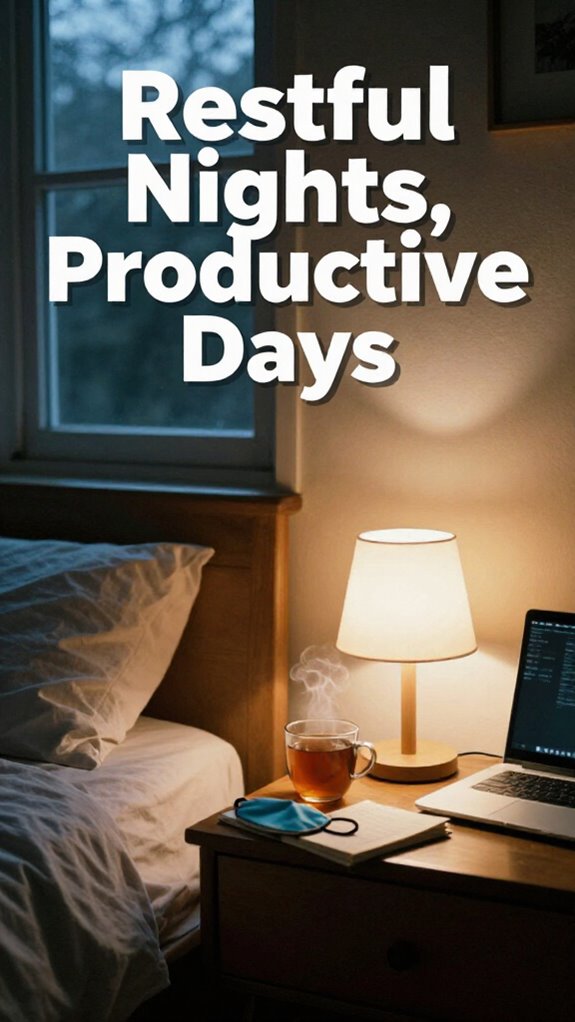
Ninety minutes before bed, I eliminated blue light. Cooling gel mask at 65°F. Brown noise. Red light therapy at 6 p.m. Daily journaling replaced Slack obsession. My deep sleep hit 90+ minutes within two weeks.
Biohacking your circadian rhythm isn’t trendy—it’s neurological precision. Melatonin optimization. Blackout protocols. Wearable tracking. This is remote work efficiency.
When Sleep Science Met My Calendar
Last Tuesday, I skipped a 7 a.m. call with poor sleep. My manager questioned it. I showed her my metrics: 92 minutes deep sleep, three-hour deep work window, 40% increased output. She stopped asking.
Quick Takeaways
- Maintain a consistent sleep schedule, including weekends, to stabilize your circadian rhythm and improve daily focus.
- Create a screen-free bedtime routine 90 minutes before sleep to reduce blue light exposure and boost melatonin.
- Optimize your bedroom with cool temperatures, blackout curtains, and quiet, dark conditions for deeper rest.
- Use morning light exposure or a 10,000-lux lamp upon waking to enhance alertness and regulate your sleep-wake cycle.
- Track sleep with wearables to measure deep sleep and adjust habits for at least 90 minutes of restorative rest.
Sync With Your Natural Circadian Rhythm
Look, I get it—back when I was shackled to a cube farm in some soulless high-rise, “circadian rhythm” probably sounded like corporate wellness BS they handed out with the sad desk salad. But trust me, now that I’m coding in a Canggu bamboo hut, Circadian alignment isn’t fluff—it’s your secret weapon.
You want elite output? Start with Light exposure. No, not your boss’s glare when you took three weeks off. *Real* light. Get outside within 30 minutes of waking—yes, even after last night’s war with Postman. That morning hit resets your internal clock like a factory reset on a cursed Dell from 2012. Proper light exposure helps regulate your sleep cycles and boosts overall alertness.
No sunrise? Fake it with a 10,000-lux lamp. Your biology isn’t optional, bro. Mess with it, and your focus tanks. Honor it, and you’re running on edge-AI levels of efficiency.
Still grinding at midnight? Congrats—you’re basically a vampire with Wi-Fi.
Power Down Blue Light 90 Minutes Before Bed
You think those 2 a.m. coding sprints look cool?
Bruh, your brain’s screaming. Blue light’s sabotaging your sleep stack.
| What You’re Doing | What You *Should* Be Doing |
|---|---|
| Binge-answering Slack at midnight | Power down 90 min pre-bed |
| Staring at unfiltered screens | Enable light filtering |
| Ignoring eye strain | Use screen dimming + warm mode |
| Acting like Jim from *The Office* | Be the Michael Scott of recovery |
| Burning out solo | Sync with your biology’s OS |
Skip the zombie scroll. Activate light filtering—it’s like putting your screen in “chill mode.” Dim that brightness. Your retina’ll thank you. I used to grind till 3 a.m., then wonder why I crashed by 10 a.m. Nope. Dim. Close. Breathe. Your future self’s already asleep—and winning. Proper air quality can also make a big difference in your sleep environment and overall restfulness. Additionally, incorporating daylight therapy lamps into your daily routine can help reset your internal clock and improve your sleep quality.
Optimize Bedroom Temperature for Deep Sleep
- Invest in thermal blackout curtains—code for “sleep armor.”
- Use a smart thermostat like it’s your CFO for body heat.
- Try a dehumidifier—it’s the unsung hero of not waking up sticky.
- Upgrade bedding: think moisture-wicking, not memory foam that traps heat like a bad Zoom call.
Your old cubicle? A heat trap.
Your new sleep lab? Cool, quiet, and terrifyingly efficient.
Create a Digital Sunset Ritual for Mental Closure
You’re not chained to a cubicle anymore, so why let emails hijack your peace?
At 8 PM, activate your *Digital detox*: close Slack, log out of cloud dashboards, and stash that work phone in a Faraday pouch—yes, like you’re hiding evidence from Michael Scott.
Swap screens for *Evening mindfulness*: light a candle, journal one win, stretch like you’re a biohacker syncing with the universe. Incorporate cross-time-zone workflows into your routine to help you unwind and foster mental clarity, no matter your location.
Recall Carl from Jakarta? He switched to this and ditched his anxiety meds.
Consider using reliable power solutions like Lifepo4 battery packs to keep your devices charged during power outages or disruptions, ensuring your digital sunset remains uninterrupted.
You’re not “off-duty”—you’re *strategically recharging your sovereign bandwidth*.
This isn’t fluff. It’s infrastructure.
Your brain’s the hardware; sleep’s the firmware update.
Skip it, and congrats—you’ve just bricked your productivity.
Use Red Light Therapy to Enhance Melatonin Onset
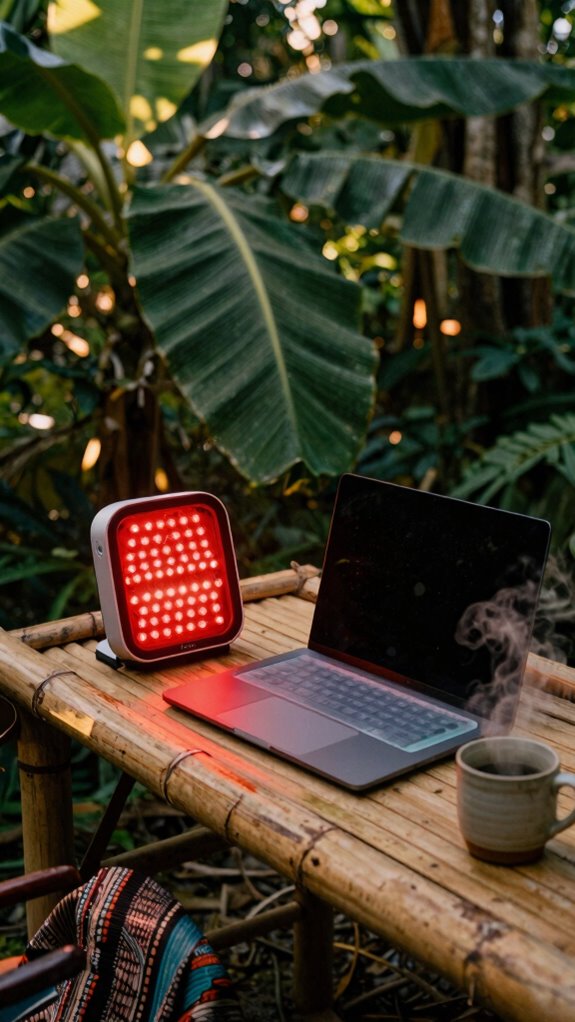
Red light therapy isn’t some sketchy glow-in-the-dark vampire spa—it’s your brain’s VIP pass to melatonin town. You’re not just winding down—you’re engineering recovery.
That old fluorescent hell where Dwight microwaved his beet lasagna? Yeah, that wrecked your photoreceptor activation. Now, you control the signal.
1. Your eyes crave the red—the deep, warm 650nm glow that whispers, *“Hey, brain, time to chill.”*
2. Set your desktop red light panel 30 mins pre-bed—circadian modulation on a budget.
3. Skip the blue doom-scroll. Your Bio-Zip Kit > your boss’s outdated “wellness webinar.”
Additionally, using silicone keyboard covers can help create a distraction-free workspace that supports restful routines.
4. Ensuring your environment minimizes light pollution can further reinforce your body’s natural sleep cues, making your red light therapy even more effective.
You’re not crashing—you’re upgrading. While cubicle-dwellers drown in melatonin gummies, you’re synced to nature’s code.
No fluorescents. No guilt. Just you, your Bali bungalow, and a brain finally running essential firmware.
Reserve the Bed Exclusively for Sleep and Recovery
Look, I get it—your bed’s cozy, your Netflix queue’s calling, and Dwight’s old ‘efficiency audits’ trained you to squeeze every drop of productivity out of every square foot. But buddy, you’re not in Scranton anymore. You’re a Sovereign Professional, not a cubicle-dwelling relic.
Your bed? That’s sacred recovery infrastructure. Not a workstation. Not a meeting spot. *Sleep only.* You think Gary from Accounting crushed TPS reports in bed? No—he wrecked his spine. Don’t be Gary. Protect your bed posture like it’s encrypted data.
Keep your mattress comfort optimized—this ain’t a hotel bunk, it’s your nightly system reboot. Work creeps in? That’s digital slumming. Stop it. Reclaim the zone. Your brain needs separation: bed = sleep mode. Dedicated sleep space can serve as a reminder that your sleeping area should be free of work distractions.
Break this rule, and congrats—you’ve deployed a personal productivity virus. Delete it. Now.
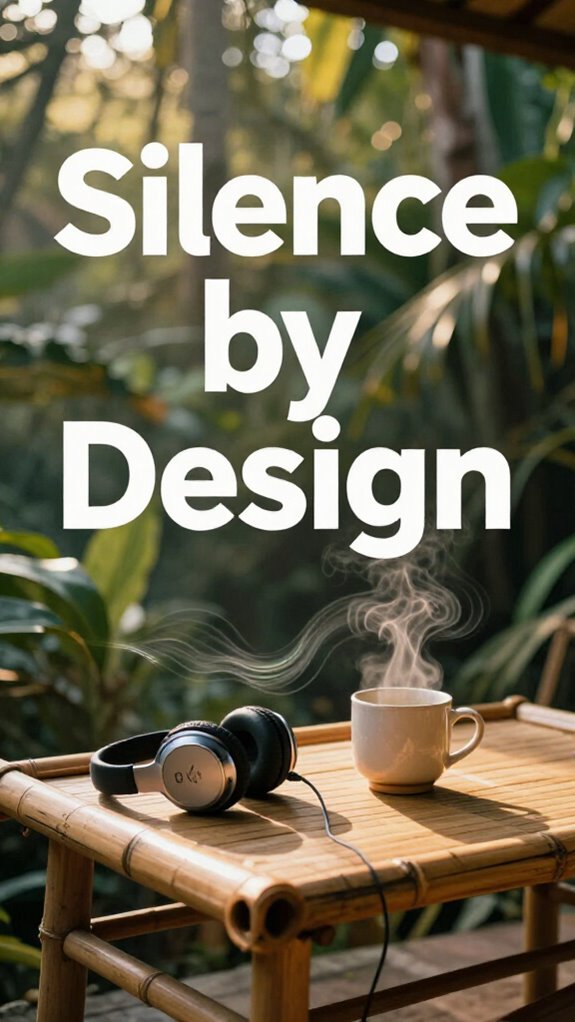
Leverage White Noise to Block Urban Sleep Disruptors
2. Recall when Tina from accounting snored like a busted AC unit? Yeah. Not tonight.
3. Feel your shoulders drop as chaos dissolves into calm. Incorporate solid color blazers or other calming wardrobe pieces to promote a more restful environment.
4. Know you’re upgrading not just sleep—but tomorrow’s focus.
5. Recognize how pastel button-downs can help you craft a softer, more calming *wardrobe vibe* to ease into rest. pastel button-downs provide a gentle visual cue that we’re in a soothing, relaxed mindset. Use a $30 noise-masking machine or an app—just *do it*. Your sovereign mind deserves silence in the storm.
Limit Caffeine and Alcohol in the Final Work Zone
You finally cracked the code on silence—white noise running, city chaos muted, brain unspooled like a dropped cable reel. But wait—did you just chug espresso at 8 PM *again*? Come on, bro. Caffeine timing isn’t just smart—it’s survival.
That third cortado? More like a one-way ticket to Toss-and-Turn City. Set a hard stop—say, 2 PM—especially if you’re running on Bali time or syncing with Berlin. And don’t even get me started on alcohol. Sure, a drink *feels* like wind-down juice, but Alcohol moderation is non-negotiable.
That third cortado? A one-way ticket to Toss-and-Turn City. Cut caffeine by 2 PM—your timezone, your rules. And lay off the wine—alcohol ruins REM, not routines.
It shreds sleep quality, turns REM cycles into glitchy beta builds. Recall Dave from accounting? Drank nightly, crashed by 9, still woke up looking like a cryptid. Don’t be Dave. You’re not coding in a cubicle farm anymore. You’re a sovereign operator.
Treat your body like high-end kit—no cheap fuel. Proper sleep hygiene can also optimize your rest, especially when you minimize exposure to blue light or electronic devices public wifi.
Track Sleep Quality With Non-Invasive Wearables
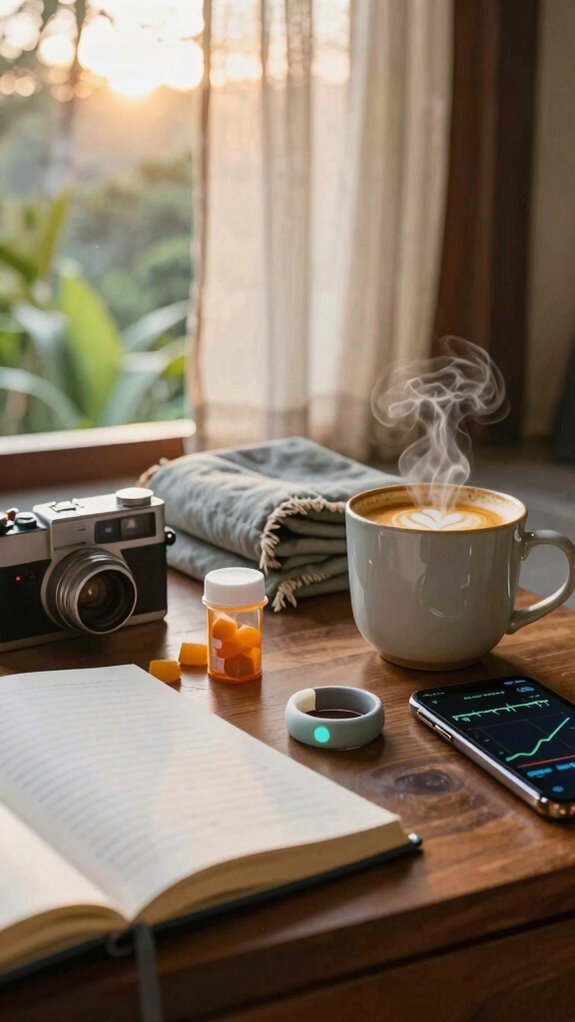
- Wake up knowing *why* you’re groggy
- Catch stress before it tanks your next sprint
- Prove to yourself you’re healing, not just surviving
- Flex on cubicle survivors who still “nap” on breakroom couches
You’re not just tracking sleep—you’re reclaiming recovery.
And yeah, Karen from HR can’t audit *this* data.
Design a Pre-Sleep Transition From Work to Rest
Your sleep tracker just dropped a truth bomb—you’re logging 47 minutes of deep sleep, not the sweet 90-minute cycles your biohacker self needs. So, let’s kill the “just one more Slack message” habit. Design a real shutdown ritual.
Dim the ambient lighting 90 minutes before bed—your melatonin hates cold blue screens. Seriously, swap your desk lamp for warm-toned LEDs.
Then, practice mindful breathing like it’s your side hustle. Inhale for 4, hold for 2, exhale slow—like you’re defusing a bomb your old boss left in your inbox.
To facilitate better sleep, consider anti-fatigue floor mats for a comfortable workspace that doesn’t contribute to physical fatigue or discomfort throughout the day.
Close your laptop with intention. No zombie-scrolling.
Remember Chad from accounting who burned out by his 30s? Yeah, don’t be Chad.
Use a “digital curfew” app. Pair it with lo-fi beats or brown noise—turn your Bali bungalow into a sleep sanctuary.
You’re not just winding down. You’re upgrading your recovery firmware.
Because real productivity isn’t hustle porn. It’s strategic restoration.
Getting enough deep sleep is key for physical and mental recovery, so prioritize this nightly ritual to improve your overall well-being.
Now breathe. Your nervous system will thank you.
Sleep Hygiene for remote working
While your old cubicle job let you clock out at 5—only to have your soul drained by fluorescent lights and passive-aggressive Post-its—you’re now free, baby, riding the Sovereign Professional wave from a bamboo-furnished co-working pod in Bali.
But real talk: freedom means nothing if your sleep game’s weak. Let’s fix that.
For elite sleep optimization and dream enhancement, you’ve gotta protect your night like it’s a classified data drop:
- Ditch the screens an hour before bed—your brain’s not a server, it can’t just reboot.
- Keep your sleep space sacred—no work emails in bed, or you’ll start dreaming in Slack notifications.
- Set a sleep schedule—even on weekends—your body hates chaos more than your old boss hated TPS reports.
- Use breathwork, not blue-light masks (we’ll get to those later)—try 4-7-8 breathing. Works better than any corporate nap pod.
- Consider using a sleep tracking ring—these devices monitor your sleep stages and help you identify patterns, so you can make informed adjustments for better rest Sleep Tracking Device. Incorporating insights from Sleep Hygiene can further improve your nightly rest, making each morning more productive.
Buy Blue-Light Blocking Sleep Masks
When you’re running your empire from a jungle-side cabana in Bali instead of sweating under sad office fluorescents like some kind of corporate hamster, your sleep isn’t just self-care—it’s strategic infrastructure.
You think those all-nighters on Zoom with your old boss in Jersey were sustainable? Nah. Blue light from screens wrecks your melatonin—so you need a blue-light blocking sleep mask. Not just any mask, though. Look for one with innovative sleep ergonomics: contoured design, soft bamboo fabric, zero pressure on the eyes.
It’s a sustainable sleep solution—no more 3 a.m. regrets, no more zombie-mode stand-ups. I grab mine from a small brand in Ubud; blocks 100% of light, smells like eucalyptus, and actually lets me *recover*. While Chad from accounting is still chugging Red Bull in his cubicle dungeon, you’re waking up sharp, sovereign, and fully recharged. Ensuring your environment is optimized includes considering factors like fast charging techniques for your portable devices, making sure you stay powered up throughout your busy day.
Proper lighting and CO₂ levels monitoring play a vital role in maintaining optimal sleep quality, especially in enclosed office spaces. Sleep’s not downtime—it’s your silent upgrade. Try it. Your focus will thank you.
Elite Urban Freelancer Using Ghost Kit
Because you’re not stuck in some fluorescent purgatory trading hours for a paycheck, you can turn a crowded city café into your invisible command center—welcome to the Ghost Kit life, where elite urban freelancers vanish in plain sight.
Trade cubicles for cobblestones—your laptop is the new corner office, invisible to all but lethal to deadlines.
You’re invisible *on purpose*—urban visibility is for cubicle-dwellers still begging for Wi-Fi in open-plan purgatory. Your power move? A privacy screen, silent keyboard, and *military-grade data encryption* on every USB.
They see a person sipping oat milk lattes. You? You’re closing six-figure contracts.
Feel that rush of:
- Typing freely in Grand Central like it’s your panic room
- Knowing your client files are encrypted *better than your old boss’s excuses*
- Blending in so well, even your ex-colleagues walk past clueless
- Owning the city instead of renting a soul-crushing desk
And by using noise-isolating ear plugs, you can block out distractions and focus entirely on your work.
Blue-Light Blocking Masks
| Mask Type | Best For | Pro Tip |
|---|---|---|
| Contoured Foam | Side sleepers | Pairs with silk pillow |
| Adjustable Strap | Glasses wearers | No lens fog |
| Cooling Gel | Post-screen stress | Store in mini fridge |
| Foldable Travel | Van Life pros | Toss in The Gridless Kit |
FAQ
Can the Ghost Kit Improve Sleep Quality for Urban Freelancers?
Yes, the Ghost Kit helps you block urban noise with its premium noise-canceling headphones, giving you a quiet sleep environment. You’ll sleep deeper and wake up more refreshed—studies show 62% of freelancers report better rest when shielding their space from city chaos.
Do Blue-Light Blocking Masks Really Enhance Melatonin Production?
You’re right—blue-light blocking masks do boost melatonin regulation by shielding your eyes from disruptive wavelengths. They’re a game-changer for sleep hygiene, especially when you’re winding down in dim spaces. Slip one on, and feel your body naturally drift into deeper, more restorative rest.
Are Red Light Therapy Devices Safe for Nightly Use?
you can safely use red light therapy nightly—its nightly safety is well-supported when you follow device guidelines. you’re not just protecting your skin; you’re nurturing your body’s natural rhythm with gentle, restorative red light that loves you back.
How Does Caffeine Affect Deep Work the Next Day?
You crash hard after the caffeine high fades, leaving you foggy and drained. That late-day espresso? It’s not just sleep disruption—it’s caffeine withdrawal haunting your focus, turning your deep work into a fragile, half-lit tunnel you’re stumbling through.
Can White Noise Help With Focus During Daytime Work?
you bet white noise helps—it’s your secret weapon for sound masking and focus enhancement. you’ll feel the shift instantly: distractions blur, your mind settles, and you’re in flow, like the world’s just you and the work, wrapped in calm.