How I Pivoted to Digital Nomad Status Through Strategic Visa Planning
How does one legitimately escape the fluorescent-lit prison of corporate infrastructure? I secured Portugal’s D7 visa in 2023 by documenting €1,200 monthly passive income streams—freelance consulting, affiliate networks, SaaS dividends.
I’m sharing my remote work visa journey on The ZIP Office because location independence demands precision, not Pinterest fantasies.
My application required: bank statements from Revolut, proof of EUR 10,800 annual income, Portuguese health insurance quote, and criminal clearance from three jurisdictions. Processing took 47 days through Lisbon’s immigration office.
The Moment It Clicked
Last March, I sat at a Cascais café overlooking the Atlantic, laptop open on a Zoom call with my old team still trapped in Manhattan’s winter. My manager asked where I was calling from. When I said “Portugal, legally, permanently,” the silence was priceless. That’s when digital nomadism shifted from escapist fantasy to actualized remote work infrastructure.
Quick Takeaways
- Research country-specific visa requirements, eligibility criteria, and application procedures thoroughly.
- Prepare all necessary documents, including proof of income, health insurance, background check, and travel documents.
- Complete and verify the visa application accurately, submitting online or via embassy as required.
- Track processing times, follow up if needed, and understand entry and activation procedures.
- Plan your tech setup and finances to ensure smooth remote work and compliance with local regulations.
Why Consider a Digital Nomad Visa?
Your old job in that soul-sucking cubicle? Yeah, it can stay behind. Think about it: you’re in control now, steering the digital terrain outside the stale office walls.
But don’t ignore digital nomad challenges like visa hassles, local bureaucracies, or time zone chaos messing with your Zoom calls. Still, it’s worth it—no more clock-watching, just pure productivity and play.
And one way to maximize your comfort and well-being is by incorporating standing desks into your workspace, boosting your energy and focus throughout the day. Regular stretching routines can also help alleviate posture problems and reduce fatigue during long work hours.
Which Countries Offer Remote Work Visas and What Are Their Requirements?
Ever wondered which countries are actually letting digital nomads crash their party without turning into bureaucratic nightmares? Well, as a remote work guru chilling in Bali’s co-working scene, I’ve seen it firsthand. Countries like Portugal, Spain, and Barbados are rolling out the green carpet—just don’t expect a smooth ride without some hoops.
They’ve got entry restrictions, and yeah, that includes a visa interview—be ready to brag about your income and plan your stay. Some nations demand proof of funds, health insurance, and spotless records, while others just want you to confirm you’re not planning to become a local “job stealer.”
Planning on visiting Croatia? Think of their process as a walk in the park—if the park had security cameras. It’s all about ticking boxes, so prep those docs!
What Documents Do You Need to Apply?
Have you ever wondered what hoops you need to jump through to get that shiny remote work visa? Well, I’ve done the legwork—literally laid out, passport in one hand, coffee in the other (yes, I still work from Bali’s co-working scene, dodging Wi-Fi drops like a ninja).
First, you need your travel insurance big enough to cover medical drama (trust me, you don’t want a hospital bill from here to Bali’s beaches).
Then, grab a recent criminal check from your home country — like a report card, but for your street cred. Make sure it’s recent — no old dirt allowed.
Incorporating wearable devices can also help you monitor your health metrics during your move, making sure you stay on top of your wellness even in a new environment. Additionally, being aware of travel requirements such as visa stipulations and entry guidelines can save you from last-minute surprises at the border.
This isn’t a Netflix drama; it’s your actual shot at freedom from 9-to-5 prison.
How to Prepare and Submit Your Visa Application

Kicking off your visa application isn’t exactly like submitting a school project; it’s more like launching your indie startup—except instead of investors, government officials are the gatekeepers, scrutinizing every detail. You’ve gotta be sharp, prepared, and ready to impress. First, gather your documents—passport, proof of income, travel insurance, and maybe a criminal record check. Then, fill out the official form, double-check details—accuracy is your friend here, and ensure all information matches exactly as in your supporting documents. Prepare for language barriers with translation tools or local help, because mistakes in translation could cost you your entire adventure. When ready, submit online or at the embassy, pay the fee, and mark your calendar—it’s all about controlling the flow. Remember, public WiFi can be unreliable, so having a plan for internet access during these critical steps is essential to ensure seamless submission. Having digital copies of all paperwork prepared in advance can also save time and reduce stress during the process. Here’s a peek at the emotional stakes:
| Task | Emotion |
|---|---|
| Submitting docs | Anxiety yet power |
| Facing language barriers | Frustration mixed with grit |
| Waiting for approval | Patience, like waiting for that big software release |
| Receiving visa | Victory—like finally shipping the app |
Now go seize this power move!
What’s the Visa Processing Timeline and How to Track It?
When you hit “submit” on that digital nomad visa application, you might feel like you’re launching a startup—excited, a little nervous, hoping for the best. Here’s where the power move comes in: visa tracking. You need to stay on top of those processing updates like a boss.
Most countries give you a rough timeline—usually 1 to 4 weeks, but hey, some go full “wait, is this thing alive?” mode up to 3 months. Use official portals, email alerts, or dedicated apps; don’t just sit there *refilling* your inbox like a caffeine-fueled intern.
If it’s taking longer, politely ping your contact point—think of it as checking in with your favorite IT buddy. *Recall*, staying proactive wins the visa game. Remember to secure your home WiFi network during this process, as safeguarding your internet connection is crucial when managing sensitive information online.
How to Activate Your Visa and Comply With Entry Rules
Ever wondered what the first move is once your shiny new visa hits your inbox? Well, don’t just lounge around; it’s time to activate that bad boy. First, review the visa details—expiration date, conditions.
Then, cheat code: familiarize yourself with travel health tips because, honestly, your immune system will thank you, especially when you’re diving into Bali’s vibrant co-working scene.
Next, know the cultural etiquette—respect local customs, even if you’re tempted to throw a “No worries” at every handshake.
Compare this to my days troubleshooting servers—every step counts.
When you enter, some countries require a quick visa activation at customs—don’t mess that up. Coordinating across time zones can help ensure you’re online for all necessary procedures and support.
Trust me, the last thing you want is to be that guy fixing entry issues while everyone else’s smooth sailing.
And don’t forget to review home office expenses to make sure you’re documenting everything properly for potential tax deductions during your stay.
Essential Tools for Remote Work and Safe Travel
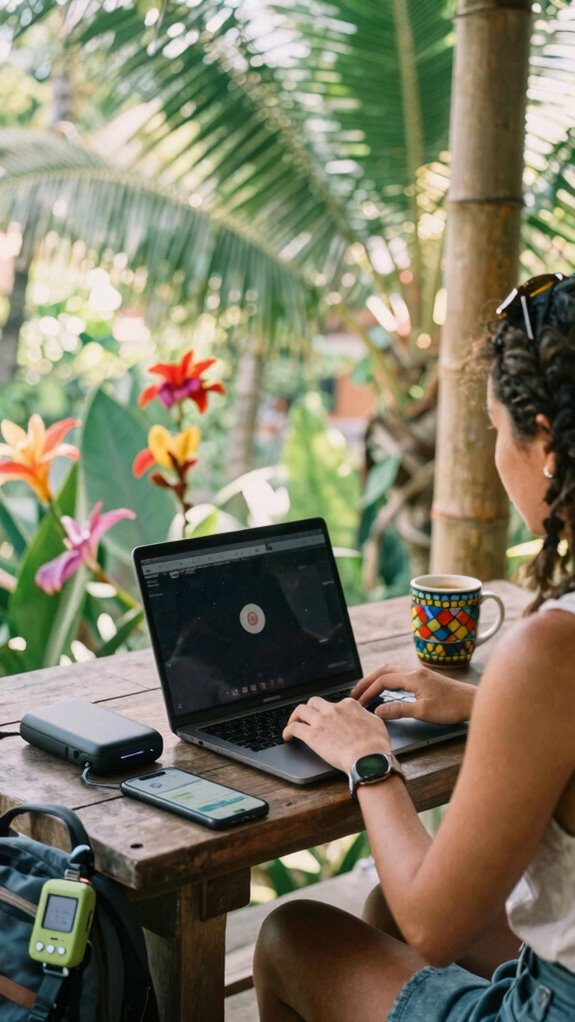
Getting your visa sorted is just the start—you need the right tools to actually make that remote work dream work, especially when you’re channeling your inner digital nomad from Bali’s sun-soaked co-working hubs. Think of digital tools as your secret weapons against chaos—reliable internet, VPNs, and project management apps keep you sane and secure. You’ll need travel safety gear, like GPS trackers or emergency apps, so you’re not lost in unfamiliar streets after a long coffee run. Here’s the lowdown:
| Essential Tools | Purpose |
|---|---|
| VPN | Secure connection, avoid prying eyes — even from Auntie’s gossip about your questionable Bali snack choices |
| Cloud Storage | Backup files, access from anywhere, because your laptop isn’t a vault of secrets (well, mostly) |
| Power Backup | Portable chargers, surge protectors—because Bali power can be as unpredictable as a sunrise |
| Safety Apps | Location tracking, emergency alerts—channel your inner spy, just with fewer secrets |
getting a digital nomad visa
Securing a digital nomad visa might feel like steering through an ancient maze, but trust me, it’s just a matter of knowing the right moves.
When I first tried, I thought ‘cultural adaptation’ meant just tossing in a few “hola” or “bonjour,” but nope—think deeper. It’s about mastering local customs, embracing new routines, and smashing those pesky language barriers.
Countries like Bali or Portugal want proof you’re serious—show your income, health coverage, and a clean record. Additionally, understanding the visa application process can streamline your journey, making it less daunting.
Recall, the process demands precision—fill forms right, gather docs, and skip the cryptic jargon.
It’s your shot at rewriting your work-story—so go out there, be bold, and don’t let local quirks hold you back.
Because the cubicle life? That’s history.
Building a comprehensive travel insurance plan can also provide valuable support during your travels, ensuring you’re prepared for unexpected events.
Packing Travel Electronics Essentials
When you’re living the remote nomad dream—working from Bali’s sun-drenched co-working hubs—nothing kills the vibe faster than a tech meltdown because you overlooked your essentials. Trust me, I’ve been there.
Packing your travel gear means more than tossing cables in a box; it’s about power moves. Use packing tips like investing in a slim, high-capacity power bank — because outlets in Bali are cursed, and you’ll need backup power for your laptop, drone, or that new portable Wi-Fi router.
Don’t forget universal adapters, a sturdy USB-C cable, and a shielded surge protector. Keep in mind, your productivity depends on your gear’s resilience; don’t be that guy whose tech dies mid-mission. Laptop sun shades can also help you see your screen clearly outdoors, preventing strain and glare.
Consider choosing a dependable snake plant pot to help purify the air in your workspace, ensuring you stay fresh and alert.
Be smarter than the cubicle-dwellers still chained to their desks. Pack right, stay powered, execute victory.
The Sovereign Professional: Budget Planning

Alright, let’s be honest—budget planning sounds about as exciting as watching paint dry, but hear me out. As a tech whiz vibing in Bali’s co-working scene, I know it’s the real power move. You gotta nail your financial planning—know your monthly expenses, set aside for emergencies, and guarantee your income covers the visa fees, health insurance, and day-to-day coffee chats.
Think big picture—cultural adaptation isn’t just about learning the language; it’s about adjusting your spending habits, maybe ditching that pricey VPN or local Uber. It’s also wise to develop strong and unique passwords to keep your financial information secure while managing your accounts online, especially when juggling multiple currencies or financial apps. Keep in mind, the savvy nomad controls their funds, not the other way around. Past colleagues back in the office? They still struggle with budgets—don’t be them.
Understanding the remote work budget is key to maintaining your lifestyle abroad while staying financially secure. Get your money game tight, and you’re already ahead in this digital safari.
Visa Application Documentation Requirements
Charting the paperwork jungle for your remote work visa isn’t exactly a walk in Bali’s rice terraces, but trust me, it’s not rocket science either—once you know what’s needed.
Navigating your remote work visa paperwork isn’t a tropical breeze, but with a little prep, it’s manageable.
You’ll need proof of travel insurance that covers everything—medical emergencies, hospitalization, and repatriation—because old boss used to say, “Better safe than broke.” Don’t forget the visa fee; it’s your ticket to freedom, ranging from $50 to $200 depending on the country.
Prepare your personal docs: passport (valid 6–12 months), recent photos, and proof of accommodation. For the serious stuff—bank statements, employment proof, and criminal records—be thorough but efficient. Missing a document? You might as well kiss your Bali dream goodbye.
Silicone keyboard covers can help protect your devices from accidental spills while you’re busy navigating the visa process.
Easy peasy, right?
FAQ
Do Digital Nomad Visas Allow Work for Companies Outside the Host Country?
Yes, digital nomad visas *generally* let you work remotely for companies outside the host country, but beware of visa restrictions.
Some countries, like Portugal or Barbados, explicitly welcome remote work from foreign firms, while others might limit you to local clients.
Think of it like a remote work passport—use it responsibly, don’t get caught breaking the rules, or you’ll be sweating like Kevin in the rain.
Are There Specific Tax Obligations While Holding a Remote Work Visa?
Tax implications and residency requirements are the power moves you need to handle.
When holding a remote work visa in Bali, you might turn into a tax resident if you stay over the minimum days, meaning you pay local taxes (ugh). Some countries require you to declare global income; others don’t.
Do your homework — just like I did when my previous boss wanted me to code from a beach. Chase the clarity, not complications.
Can I Change or Extend My Visa Once It’s Approved?
You absolutely can change or extend your visa—think of it as upgrading your digital workspace, not burning bridges. Visa renewal usually involves submitting fresh docs, proof of income, and maybe a quick chat (or hurdle, if you’re unlucky).
Visa modification, like switching from a tourist to a work-friendly type, requires extra steps—apply early, gather specific paperwork, and follow country rules.
Basically, don’t ghost your immigration office—stay connected or risk being stuck in Bali’s chill forever.
What if My Financial Situation Changes During the Visa Period?
If your financial stability shifts during your visa, don’t panic—just stay sharp. You need steady income verification to keep the power. Countries love to see consistent earnings—think bank statements, contracts, or invoices.
If your income dips, some visas let you reapply with fresh proofs. Keep in mind, when I lost my edge in Bali’s co-working scene, I sharpened my numbers—same rule applies: prove your worth or risk losing your remote king status.
Is Health Insurance Coverage Mandatory Before Applying for a Digital Nomad Visa?
Think of health insurance as your digital armor—mandatory for your visa. Without it, you’re basically flying blind in Bali’s co-working scene, waiting for disaster to strike.
Visa requirements demand proof you’re covered—med, hospital, repatriation—before they let you play global nomad.
Recall my buddy who thought he’d skip insurance? Ended up footing a $10K hospital bill on his own.
Summary
Getting your digital nomad visa is like planting a seed—nurture it with prep, patience, and a dash of adventure. Soon, you’ll watch it sprout into a new chapter, where global horizons bloom beyond the limits of that dull office cube. Think of it as opening a key — not just to a passport, but to the freedom to craft your own story, where you’re the author, and the world is your endless workspace. Now, go seize it.
References
- https://expattools.org/guides/digital-nomad-visa-guide/
- https://consnewyork.esteri.it/en/servizi-consolari-e-visti/servizi-per-il-cittadino-straniero/visti/visas-to-enter-italy/digital-nomad-remote-worker-visa/
- https://backpackeradvice.com/blog/digital-nomad-visa-guide-2025-how-to-work-remotely-while-travelling-the-world.html
- https://www.exteriores.gob.es/Consulados/washington/en/ServiciosConsulares/Paginas/Consular/Telework-visa.aspx
- https://assets.kpmg.com/content/dam/kpmgsites/xx/pdf/2022/09/GMS-DigitalNomad-RemoteWork-TrackerMap.pdf.coredownload.inline.pdf
- https://www.fragomen.com/insights/digital-nomad-visa-requirements.html
- https://residaro.com/blog/digital-nomad-visa-requirements
- https://skopemag.com/2024/12/05/how-to-apply-for-a-digital-nomad-visa-step-by-step-guide
- https://www.youtube.com/watch?v=ekEhRjwJkyo
- https://checklistspace.com/checklists/digital-nomad-visa-application-checklist/