Why Remote Work Demands Smart Wearables
Your neck’s screaming. Your cortisol’s spiking. Your sleep’s nonexistent.
I’m writing to The ZIP Office because I’ve lived this geographic arbitrage dream across Southeast Asia—and nearly destroyed my body doing it.
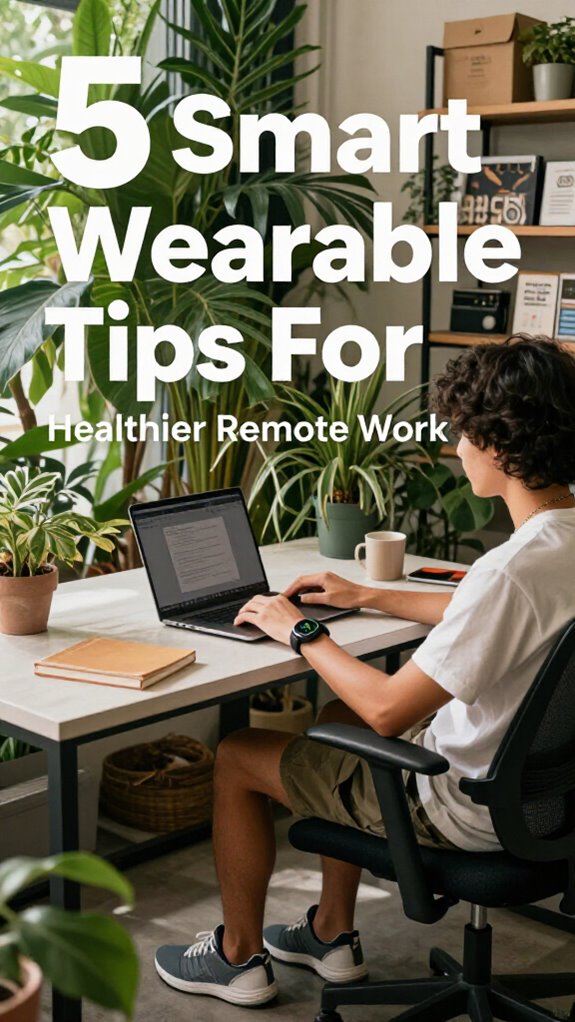
Posture sensors saved me from tech neck during endless calls. Stress monitors kept me sane when deadlines crushed in. Sleep trackers? Non-negotiable for staying human. Activity rings forced movement between deep work sprints. That’s healing infrastructure for distributed workers.
Last month, my son watched me slump over my laptop for eight hours straight. He asked, “Dad, are you sick?” That question hit different. Now I wear my fitness ring not just for metrics—I wear it to show him that taking care of yourself while building something matters.
Quick Takeaways
- Use posture sensors to receive real-time alerts and correct slouching, reducing neck and back strain during remote work.
- Integrate stress-monitoring wearables with mindfulness apps for proactive stress management and mental clarity.
- Track sleep quality with advanced sleep monitors to enhance rest and boost daytime focus and productivity.
- Set activity reminders and hydration alerts via wearables to prevent prolonged sedentary periods and improve overall health.
- Utilize fitness rings and eco-friendly devices to personalize wellness routines, balancing nutrition, movement, and work environment.
How Wearables Can Improve Your Posture During Remote Work
So, envision you’re sitting in a Bali co-working space, your laptop propped on a makeshift stand while waves crash outside—pretty idyllic, right? I’m an IT pro here, and trust me, I’ve seen every version of “ergonomic adjustments” fail—except when you use wearables.
These gadgets give instant feedback on your posture correction, helping you avoid that cursed “tech neck” or back pain. Ever noticed how old colleagues in stuffy offices hunched over their desks like frozen chickens? Yeah, they’re the poster kids for bad posture. Slap on a posture sensor, and every time you slouch, it buzzes—like a friendly but relentless office spirit.
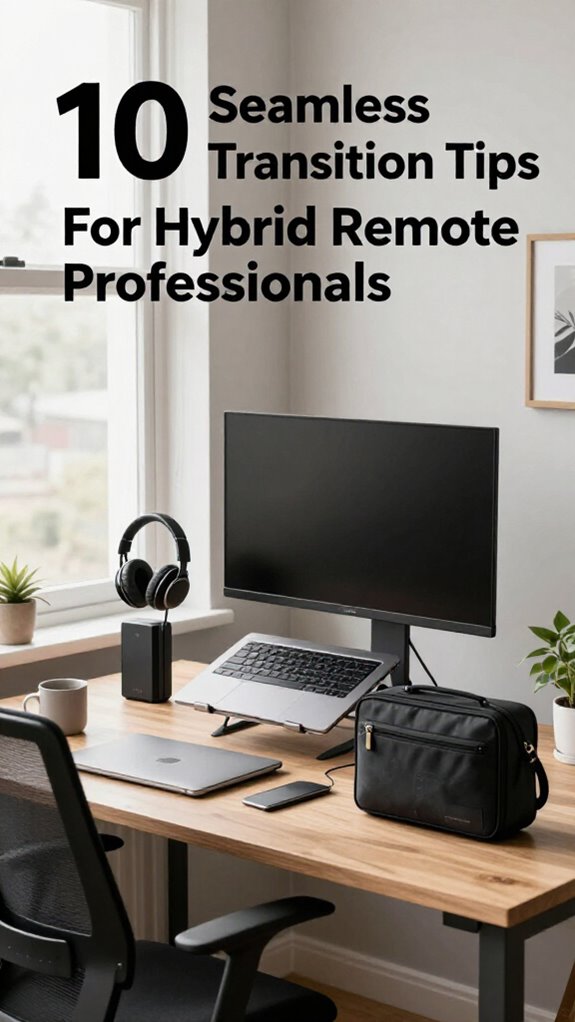
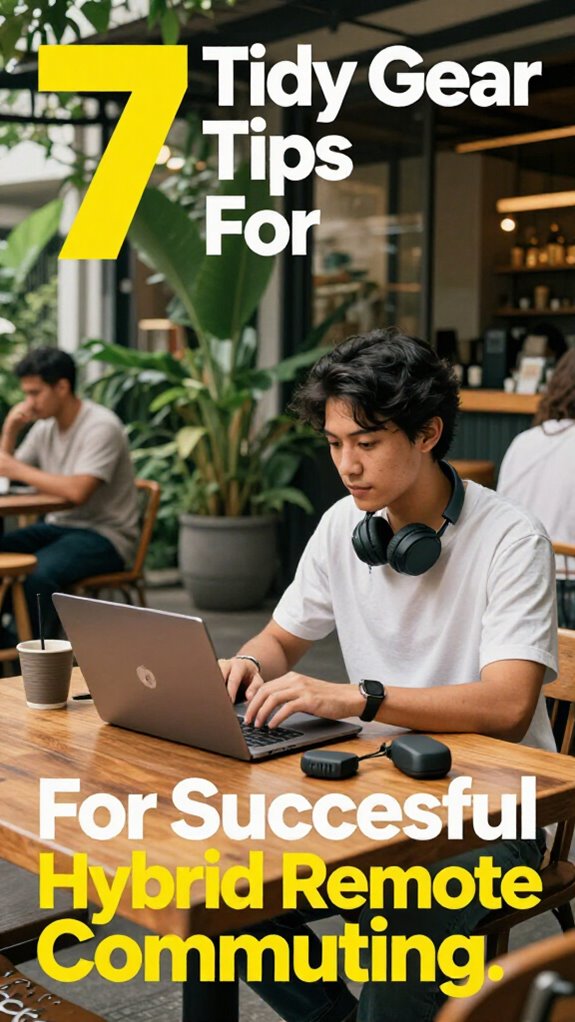
Proper bag selection can further complement these efforts by reducing strain during your commute, ensuring your equipment stays protected and ergonomic. Recall, your goal’s to stay aligned, not look like Quasimodo after a long Netflix binge. Prioritize ergonomics—effective stretching routines can also help prevent pain and stiffness during long shifts—your future self will thank you.
Managing Stress With Heart Rate Monitors: Here’s How
Managing stress is kinda like trying to tame a wild beast—tricky but totally doable if you have the right gear. Recall those horror stories about sleepless nights at your old desk job? Well, now, with a heart rate monitor, you get instant feedback on your emotional resilience.
Taming stress is tough but doable with the right tools like a heart rate monitor for instant resilience feedback.
Ever felt your heart racing during a boring Zoom call or a tricky client pitch? That’s where HRV (heart rate variability) kicks in.
Here’s the game plan:
- Check your HRV to see how well you’re bouncing back from stress.
- Use real-time data to trigger calming techniques—like deep breaths or a quick walk.
- Track your stress levels daily for validation that your new Bali life isn’t just about sunsets.
- Adjust your environment based on your monitor’s understanding.
- Incorporate brain health practices to enhance your overall resilience and mental clarity.
Simple? Yeah. Effective? Hell yeah.
Using Sleep Trackers to Boost Focus and Recovery
If you’ve ever slogged through a long workday feeling like a zombie after a restless night, you already know the power sleep can hold over your focus and recovery. That’s why sleep trackers are basically your new best friend—trust me, they get you. They analyze your sleep quality, providing perspectives that help with Dreamscape conditioning, which is fancy talk for training your mind to “dream” better and wake refreshed. Additionally, many of the top sleep tracking apps incorporate features like sleep stage analysis, giving you deeper insights into your rest cycles. Plus, they assist in Circadian alignment, syncing your sleep cycle to your body’s natural rhythm instead of fighting it like those cubicle zombies. Want sharper focus? Just tweak your sleep routine based on data. Understanding your sleep environment—including temperature, light, and noise—can also improve your sleep quality significantly.
Recall, I used to skip nights editing code till dawn—then I got a tracker. Life’s changed, and so has my game.
Preventing Sedentary Lifestyles With Activity Sensors
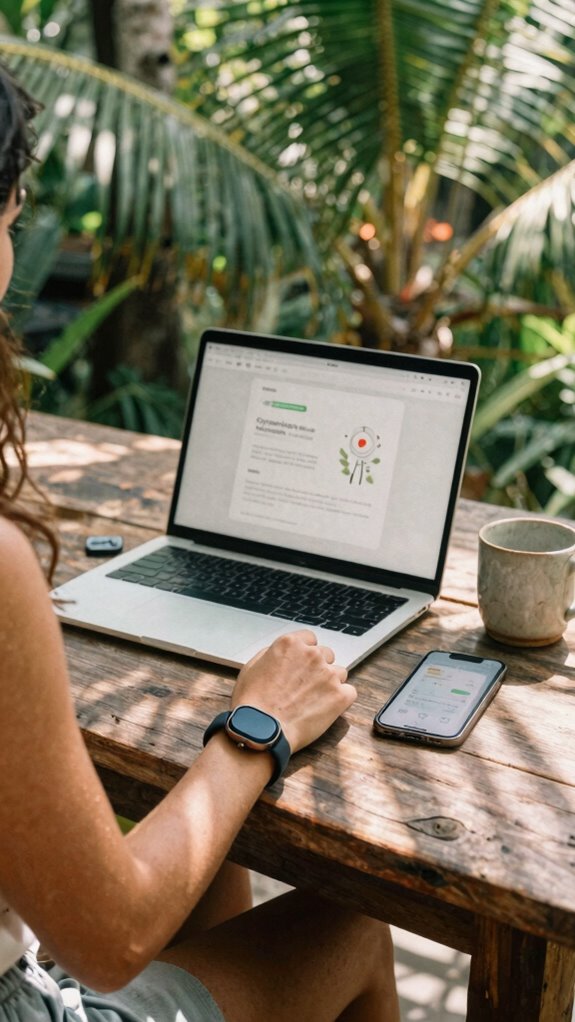
Here’s the pretty wild truth: if you think sitting for hours is just a “thing” that comes with remote work, you’re seriously fooling yourself—and probably aging faster than a cast iron skillet. Seriously, your ergonomic posture and hydration tracking can be your secret weapons.
Activity sensors help you catch yourself before turning into a sedentary zombie, nagging you to get up, stretch, or just walk around. Incorporating deep work techniques like Pomodoro intervals can help you break work into focused bursts and prevent exhaustion.
- Set daily step goals—no excuses.
- Use posture sensors to correct that hunch (yes, that “CEO slump”).
- Track hydration—you’re not a cactus.
- Schedule mini-movements every 30 minutes.
Staying connected and productive also depends on reliable public WiFi connections, since unstable internet can sabotage your focus and workflow. Back in Bali’s co-working scene, I swear these tiny habits keep you sane—and way more productive—than some endless internet scroll. Don’t ignore your body; it’s smarter than your email inbox.
Smart Fitness Rings to Optimize Nutrition and Recovery
Ever wonder if your fancy sleep tracker is actually doing its job beyond just flashing pretty lights? Enter smart fitness rings—tiny tech marvels that dive deeper than your typical wrist-watcher.
Fancy helping your body optimize nutrition while managing cortisol levels? These rings give you real-time understanding into your stress, sleep, and activity, guiding you to personalized nutrition plans that actually work. Think of it as having your own health BFF, calling out when you’re pushing too hard or slacking on recovery.
Remember old boss Dave’s endless coffee breaks? Yeah, forget that. Now, you get targeted tips to stay balanced — no more guessing games. Just pure, science-backed smarts to keep you sharp down in Bali’s coworking cafes. Because, honestly, your internal ecosystem deserves more than just a vibe check. Using prescription lens inserts can also enhance your visual clarity during extended screen time, supporting overall eye health and focus. Incorporating E Ink digital notepads into your routine can provide an eco-friendly way to track your health progress without screen fatigue, making your wellness journey more sustainable.
The Kinetic Kit Essentials
Hopping around Bali’s hot spots and cramped co-working spaces, you realize pretty quickly that carrying a bulky laptop and a mess of chargers just won’t cut it anymore. Enter the Kinetic Kit essentials—your secret weapon for mobile ergonomics and wearable aesthetics that actually look good. Forget old-school back pain from slouching in awkward chairs; these tools keep you moving smoothly and looking sleek.
- Ultra-lightweight, foldable standing desks
- Smart posture sensors that buzz when you slouch (hello, old office trauma!)
- Wearable lumbar supports blending ergonomic design with trendy style
- Compact, adjustable footrests that fit into your bag like tech treasure
This isn’t just about staying healthy—it’s about upgrading how you work, no matter the jungle gym of a city. Incorporating Blue Light Glasses can help protect your eyes during long screen sessions, especially in bright, outdoor environments of your adventures. Be the nomad who’s got everything under control. Additionally, considering top camera kill switches can help ensure your privacy remains intact during your adventures.
Instant Stress Level Monitoring
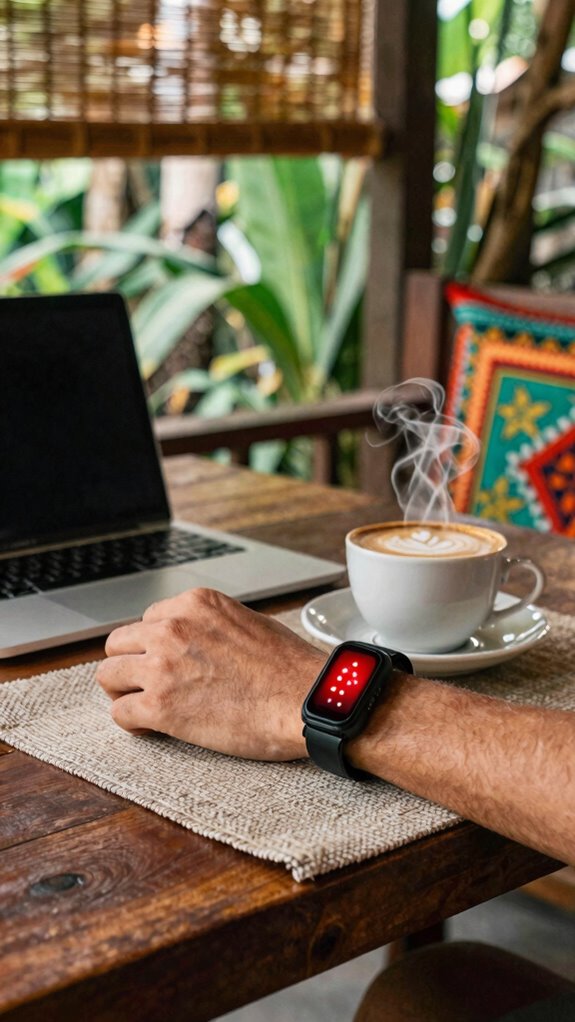
Let’s be real—if you’ve ever sat through a marathon Zoom call while your stress levels started creeping into the red zone, you know how hard it’s to keep that onboard anxiety in check. That’s why instant stress level monitoring is a game changer.
Wearables now sync seamlessly with mindfulness meditation apps, alerting you when your cortisol spikes. No more guessing if that headache or jittery hands are just tired or something worse. Just pop on a sleek wristband or ring, and it’s like having a tiny therapist whispering, “Hey, slow down—try ergonomic adjustments or take a breather.”
Recently, studies on backup software licenses highlight the importance of reliable data protection, which parallels how these gadgets ensure your mental well-being isn’t compromised by technical mishaps. When I was bouncing between Bali’s cafes last year, I caught myself ignoring stress signs until I saw my device flashing red—talk about a wake-up call. These smart gadgets force you to deal, not just drown in work, and they emphasize the significance of reliable technology for mental health management.
Real-Time ECG Heart Rate Monitors
Envision you’re back at that Bali co-working spot, sipping on a pineapple smoothie, trying to focus on your latest project, but your heart’s pounding like you’re running a marathon—without actually moving. That’s where real-time ECG heart rate monitors step in as your subtle digital wingman. They give you personalized data, letting you see exactly how stressed or relaxed you truly are—no more guesswork.
But hey, privacy concerns? Yeah, that’s real. You’re trusting these sleek devices with sensitive info, so choose ones with encrypted data and transparent policies. Here’s the scoop:
- Sync with chill apps for instant mood understanding
- Monitor your heart beat during high-stakes calls
- Avoid info leaks like a pro hacker
- Balance personal data with privacy—your call
- Using inverters in mobile work can help ensure a reliable power source for your health-monitoring devices when you’re on the go
- Incorporating Top EEG Focus Headbands can further enhance your concentration, especially during demanding tasks, by actively monitoring your brain activity.
Think about it: your own stress radar—smarter than that snoozy cubicle drone’s HR check-ins.
Elite Urban Freelancer Profile
Living as an elite urban freelancer in today’s fast-moving cityscape means you’ve already ditched the stuffy cubicles and corporate Goliaths—if you’re not already tapping into the magic of the Ghost Kit, then honestly, what’re you even doing?
In Bali’s buzzing co-working scene, I swear by virtual networking. It’s your secret weapon to stay glued to the pulse, meet clients, or just complain about your Wi-Fi—because, of course, it’s never perfect. To optimize your setup, consider organized packing to keep your tech and essentials easily accessible during travels.
Oh, and ergonomic footwear? Total game-changer. No more sore feet or back spasms from those long work hours. Recall my old boss’s endless complaints about standing all day? Yeah, forget that.
Wear supportive kicks, stay mobile, and keep your tech game tight. It’s all about seamless mobility, real connections, and crushing your day — Bali style. Incorporating office plants can also help to freshen up your workspace and improve your overall well-being.
FAQ
How Do Wearable Devices Integrate With Daily Work Routines Effectively?
You integrate wearable devices seamlessly into your daily routine by choosing ergonomic designs that fit comfortably all day, ensuring battery longevity so you’re always connected and supported. This helps you stay focused, healthy, and efficient effortlessly.
Can Wearables Predict Potential Health Issues Before Symptoms Appear?
Like a futuristic oracle, your wearables can spot early detection signs of health issues, enabling you to take preventive measures. You feel more in control, staying healthy and proactive rather than reactive, connecting deeply with your well-being journey.
Are There Privacy Concerns With Continuous Data Collection From Wearables?
Yes, continuous data collection raises privacy concerns. You must prioritize data security and carefully review privacy policies to understand how your personal health info is stored, shared, or used, ensuring your intimate health details remain protected and confidential.
How Often Should Wearable Devices Be Calibrated for Accuracy?
Your wearable device needs calibration every few months, like tuning a vintage instrument, to keep its accuracy sharp. Keep in mind, device longevity depends on regular calibration frequency, ensuring your health data stays reliable and true to your body’s rhythm.
What Is the Best Way to Choose Wearables for Specific Health Goals?
You should start with your specific health goal, focusing on customization options, then check device compatibility to guarantee it seamlessly integrates with your lifestyle. Trust your intuition, and pick a wearable that truly feels right for you.