
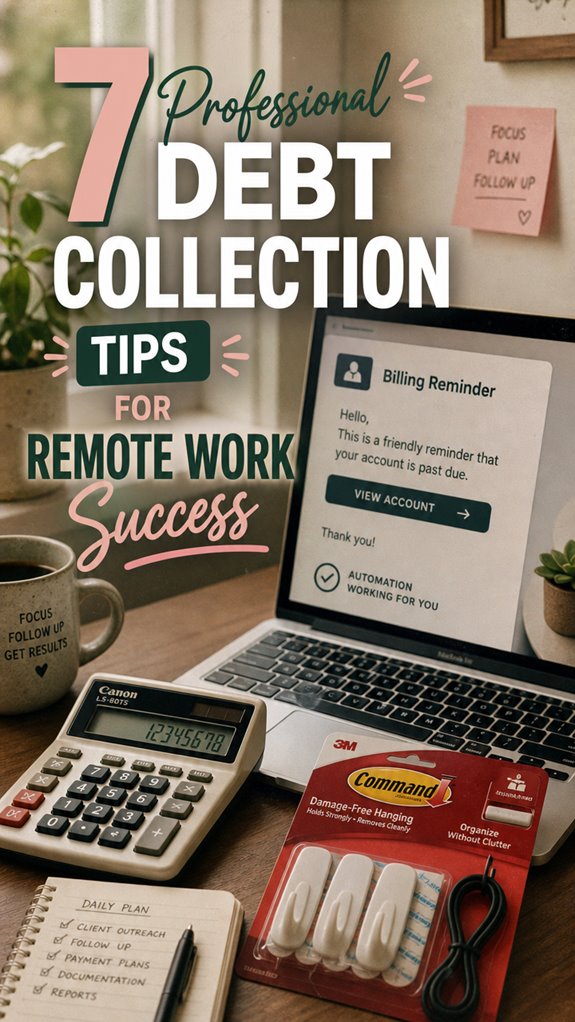
Remote Debt Collection: Master Cash Flow Management From Anywhere
How do freelancers maintain healthy cash flow across time zones? I discovered the answer through three years managing remote invoicing at The ZIP Office.
I write this because our community struggles with payment delays killing productivity. I’ve implemented automation through FreshBooks and Stripe, setting non-negotiable 10-day payment windows with 2% late fees. My clients respond better to specificity—mentioning exact dates beats vague deadlines. Escalation templates saved me hours. Strategic payment plans converted 60% of defaulted accounts into reliable revenue streams.
Last November, client Marcus delayed payment for six weeks. I implemented a polite-but-firm three-stage follow-up sequence using Calendly reminders. He paid immediately after the second message. That moment crystallized it: remote debt collection thrives on systematic precision, not persistence theater.
Quick Takeaways
- Establish clear, enforceable payment policies and communicate them professionally upfront.
- Automate invoicing and reminders to ensure timely delivery and follow-up.
- Use secure online payment methods for instant, seamless collection.
- Follow up promptly with polite but firm communication for overdue accounts.
- Maintain organized financial records and secure digital data to protect cash flow.
Understanding Payment Challenges in Remote Contracting
Ever wonder why getting paid on time feels like chasing a unicorn, especially when you’re working remotely from some Bali co-working paradise? I’m an IT ninja, chilling in Bali’s digital jungle, and trust me, I’ve seen it all—clients who ghost, excuses that stretch longer than a Bali sunset.
Chasing timely payments feels like hunting unicorns when working remotely from Bali’s paradise.
So, how do you stay ahead? First, vet clients with background checks—if they dodge payments before, they’ll dodge again. Use sharp contracts with clear deadlines, late fees, and deposits. Using your DSLR as a webcam can even help you appear more professional during client meetings, which could motivate timely payments.
Send invoices right after work wraps; no delay, no excuses. Set automatic reminders—like a digital boss—so you don’t forget, or miss a beat.
And when someone’s slow to pay? Follow up, escalate, and don’t be shy about cutting losses fast. Power isn’t waiting. For reliable transactions, consider Public WiFi security tips to keep your data protected while managing payments remotely.
Set Clear, Enforceable Payment Terms Upfront
When you’re hustling from your Bali beach desk, the last thing you want is a client ghosting you after you’ve delivered the goods—no matter if it’s a flashy app, a sleek website, or a killer API that took sleepless nights to code.
Set clear, enforceable payment terms upfront—don’t just hope they’ll pay on time like those clueless cubicle soldiers.
Spell out exact deadlines—7, 14 days max—no wiggle room.
Include late fees—1-2% monthly, compounded—so clients know you’re serious.
Drop the clause for penalties if they slack.
Use straightforward language, no jargon smokescreens.
Example: “Payment due within two weeks, late fee kicks in on day 15.”
And remember, effective communication can help you avoid misunderstandings that lead to payment delays and protect your cash flow.
It’s about power—control your cash flow, or wind up chasing ghosts.
Automate Invoices and Reminders to Speed Up Payments
Getting invoices out the door faster than your last minute deadline is a game-changer—especially when you’re chilling in your Bali coworking spot, sipping on a kokosnuss. Seriously, why wait? Using modern invoicing tools like Xero or QuickBooks Online makes this a breeze.
Once your project wraps, hit “send” immediately—no excuses, no delays. Set up automated reminders that ping your client at 7, 14, and 21 days overdue, so you don’t have to chase—robots do it for you.
Double-check those details—ABNs, bank info—before hitting send; nothing kills power faster than a typo.
Want real edge? Effective automation integrates your software with cloud platforms for instant updates. I mean, who’s time for slow-poke payments when you’ve got a beach to lounge on?
Follow Up Effectively on Overdue Accounts

Alright, so you nailed the invoicing game—sent those bills early and automated the reminders like a boss.
Now, let’s talk follow-up—because ignoring late payers is like leaving your Wi-Fi unsecured.
First, send two polite emails, five days apart—think of it as the “’Hey, just checking in’” tactic.
Then, if no response, launch a more serious, stern email—no fluff, just facts, mentioning late fee clauses like a pro.
Still ghosted? Get on that phone.
Wait for the client to speak; don’t fill the silence—observe.
If they blow you off again, escalate by sending a final demand or involve a collection agency, preferably one that works in the digital wilderness of freelancing.
Remember, proper insulation can protect your equipment from unexpected disruptions—just like consistent follow-up protects your cash flow.
Recall: persistence beats resistance, or you’ll be just another “I’ll get to it” story.
Offer Flexible Payment Options to Ease Settlements
Ever noticed how insisting on the same old “pay upfront” thing can turn into a dead end faster than Michael Scott’s endless lines? It’s like trying to coax Wi-Fi out of a turtle—inefficient.
As a Bali remote tech whiz, I’ve found that throwing flexible payment options into your arsenal is pure power move. Offer multiple methods: EFT, credit cards, maybe even crypto if your client’s daring. Incorporating decorative wall art into your office space can also boost morale and motivation, making it easier to navigate those tricky collections.
Structure payment plans for those cash-flow-struggler clients—think “divide and conquer” instead of “fight or flight.” Throw in early-payment discounts, but keep late penalties tight.
Keep in mind, your goal’s fewer deadbeats, more net profit. Think of it as upgrading from a clunky office drone to a savvy digital ninja—more control, less headache, more time for your surf. Now, boss up!
Additionally, utilizing email sorting tools can help streamline communication and keep track of payment reminders.
Use Legal Tools and Agencies for Large Debts
You’ve already mastered the art of politely nudging those late payers with emails and reminders — nice. Now, it’s time to level up with legal tools and agencies. Think of these as your financial Avengers, ready to swoop in when the big debts refuse to budge.
For amounts over $500,000, don’t hesitate to bring in a debt collection agency — yes, those professional debt hunter types, often freelancers who wield tools like statutory demands or formal notices like a boss. These agencies often use specialized collection techniques to maximize recovery.
Want to go full power move? Use legal letter services for smooth, professional intimidation.
Ever used a statutory demand? It’s basically a debt’s death sentence. Got a client ghosting you on serious money? Recall, in the world of remote work, being tough isn’t optional — it’s survival. To ensure your strategies are effective, consider understanding the top emergency water storage solutions for safety — because being prepared is essential in any crisis.
Protect Financial Data With Strong Security Measures

When you’re handling sensitive financial data remotely—say, from your Bali co-working spot where the wifi occasionally spikes—security isn’t just some boring add-on; it’s the backbone of your hustle. Think of it like a digital fortress, especially because hackers love weak spots. You need to encrypt everything: emails, databases, even that weird client info saved on a USB. Use tools like VPNs, multi-factor authentication, and strong passwords that even your old boss at the cubicle farm would admire. A simple mistake—like leaving your laptop unlocked—can become a disaster. For added protection, understanding the latest security measures can help you stay one step ahead of cyber threats. Implementing standing desks or ergonomic setups can also boost your focus and productivity, which directly benefits your cybersecurity vigilance.
Managing Late Client Payments
Managing late client payments might feel like trying to herd cats while juggling flaming torches—dangerous, messy, and oddly hilarious in hindsight. As a Bali-based IT guru, I’ve seen this movie before. You craft flawless contracts, set clear deadlines, automate reminders, and later find your client ghosted, as if your invoice was a fleeting ghost. Sometimes, it’s helpful to know top savings goal trackers to stay financially organized, as managing your cash flow is crucial when dealing with delayed payments.
Managing late payments feels like herding cats with flaming torches—chaotic, risky, and oddly entertaining.
So, what’s the power move? First, escalate swiftly: send two polite emails, then get firm, maybe even drop a stern note referencing late fee clauses (because they *do* matter).
If no reply, pick up the phone—practice patience, don’t come off like Michael Scott—then cut your losses if needed. Engage freelance debt collectors for small sums or law for big ones.
Recall: your time is currency; protect it with ruthless efficiency. Filing a claim for travel insurance is another strategic step if your issue relates to travel disruptions, adding a layer of protection to your planning.
Implement Instant Online Payment Tools
Getting paid instantly—sounds like a dream, right? Well, with online payment tools, it’s totally doable, even from Bali’s comfy co-working scene where nobody’s watching your every move. You need slick, real-time payment options like Stripe, PayPal, or Square — not ancient bank transfers or wait-in-line at the ATM.
Embed payment links directly into your invoices—a simple click closes the deal faster than a coffee break. Recall those days in the office, waiting days for checks to clear? Forget that. Set up auto-invoicing with platforms like Xero or QuickBooks that send reminders like clockwork. Streamlining your online invoicing process not only saves time but also improves cash flow.
Want power? Enable instant card payments or direct debits. Because, honestly, isn’t it time your money moved at the speed of your hustle, not your boss’s slow-ass approval process?
And if you’re concerned about security, choosing phones compatible with secure digital wallets can give an extra layer of protection for your transactions.
Flexible Home Office Setups

Sitting in a Bali co-working spot, I can tell you, nobody’s got time for the era of boring, bulky home offices. You’re not stuck in the cubicle nightmare anymore; this is the age of Sovereign Professionalism.
Why settle for a cluttered desk when you can craft a sleek, security-driven setup? Think noise-canceling headphones, privacy screens—tools that protect your focus from the chaos of city life or nosy neighbors. Use a portable monitor, a folding keyboard, and encrypted drives for ultimate mobility.
Recall those days in the office with old colleagues, just wasting time? Instead, build an agile, modular workspace that adapts to your needs. Have fun customizing your “office,” because, let’s face it, the days of corporate sameness are dead. A well-designed studio kit can help you optimize your space and stay productive while incorporating flexible home office setups for maximum adaptability.
Who says remote work can’t be powerful?
Automated Billing Reminders System
Ever wonder how those slick digital billboards in Bali’s co-working spots remind clients effortlessly? I’m here from Bali’s buzzing scene, telling you—they’re basically the Avengers of debt recovery. Automated billing reminders are your secret weapon.
Set these up in platforms like Xero or QuickBooks. Just program reminders for 7, 14, and 21 days after invoice date — keeps you from chasing ghosts. Make sure your reminders are clear but firm, with payment links that make clients feel guilty but not overwhelmed.
Sync everything in the cloud; real-time updates mean fewer surprises. Think of it as your digital bestie—never forgetting, always pushing. Recall, manual follow-ups are for people in cubicles with no Wi-Fi. Be smarter. Automate, and let it work while you chill. Using command hook packs for organized storage can help keep your workspace clutter-free and streamline your processes.
FAQ
How Can I Identify High-Risk Clients Before Starting Remote Projects?
Ever been cruising through a weird coin flip at the marketplace? Same deal here. Use social markers—check their digital trail, past project posture, and credit smarts—like you’re decoding a spy’s dossier. Run instant background scans or ask for solid references from former clients. Think of it as your remote job’s “trust algorithm.”
Keep in mind my old boss tossing out red flags? Don’t ignore those signals. Stay sharp, and cut the risk before the first coffee kicks in.
What Are Effective Strategies for Maintaining Consistent Communication With Slow Payers?
Want amplified consistency? Use automated cadence—think 2 polite check-ins, then a no-nonsense stern email, and if they dodge again, pick up the phone (yes, *actually* call!).
Make reminders smarter by tying them to software like Xero or QuickBooks.
Keep it casual—remind them you’re not some clipboard-wielding drone—and arm yourself with firm, clear deadlines.
Recall, user-friendly automation + relentless follow-up kills late payments.
Like beating Uncle Steve at golf—precision wins.
How Do I Handle Disputes Over Invoice Accuracy or Service Delivery?
You want to squash those invoice disputes like an office IT guy fixing a jammed printer, right? First, gather crystal-clear evidence—screenshots, timestamped chats, service logs.
Politely point out discrepancies, then suggest a quick call—don’t send a maze of emails.
Be firm but friendly, like a Bali coworker offering you a coconut.
Keep in mind, smooth communication keeps your power intact, no matter how many cubicle warriors try to rain on your parade.
What Security Protocols Are Essential for Protecting Client Financial Data Remotely?
You gotta lock down your client data like it’s Fort Knox. Use end-to-end encryption on all files and emails—think of it as your secret sauce.
Set strict access controls—no wandering into the finance folder like it’s the snack drawer.
Regularly update your software—because hackers love that outdated stuff.
Like I learned from old boss Jim, if you don’t secure it, someone else will. Stay sharp, stay protected.
When Should I Escalate a Debt to a Collection Agency or Legal Action?
Ever sit back and stare at that overdue invoice, wondering if it’s time for Lord Vader to step in? You escalate to a collection agency or legal action when your gentle nudges become echo chambers—think 30+ days overdue with minimal response.
If the amount hits your set threshold (say US$1,000 or more), and your polite emails turn into crickets, it’s time to call in the pros.
Don’t wait—be the tech-savvy warrior you’re meant to be.
References
- https://sweettntmagazine.com/debt-recovery-for-remote-workers-global-guide/
- https://pcmcorp.com/blog/7-debt-collection-tips-from-a-professional-debt-collector/
- https://www.highradius.com/resources/Blog/effective-debt-collection-techniques/
- https://www.argentadvisory.com.au/wp-content/uploads/2025/08/Argent-Advisory_Debt-Collection-Checklist.pdf
- https://www.youtube.com/watch?v=SsHdnqov4L8
- https://dollarsandsense.net.au/a-remote-bookkeepers-guide-to-debt-collection/
- https://arbeitsoftware.com/how-debt-collection-agencies-can-implement-work-from-home-policies/
- https://www.lendio.com/blog/successful-debt-collection-techniques
- https://www.highradius.com/resources/Blog/7-collections-strategies-that-havent-aged/
- https://www.expertia.ai/career-tips/10-essential-tips-and-tricks-for-excelling-in-tele-collection-roles-in-bangalore-51505u